Structural Drying and Dehumidification in Lindenwold, NJ
Once the water is out, wet framing, subfloor and drywall still hold moisture. The drying team sets air movers and dehumidifiers, takes readings on every visit and pulls equipment only when the numbers say dry.
(888) 471-9821Call about drying the structure- LGR and desiccant units
- Daily moisture readings
- Equipment moved as needed
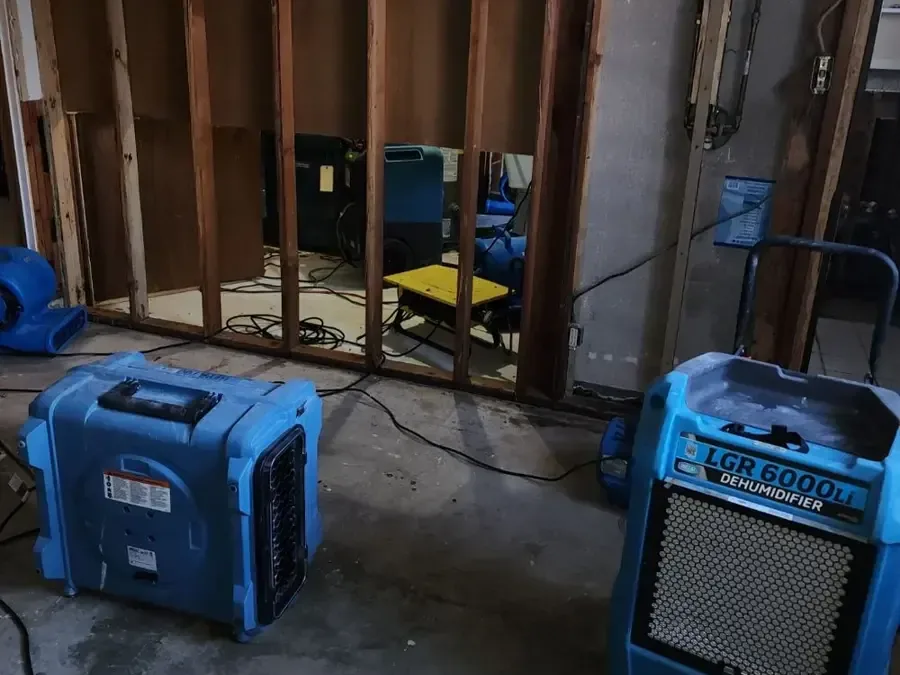
First moves for structural drying and dehumidification
- 1
Leave equipment running
Shutting units off stops the drying and extends the job.
- 2
Keep the room closed
Closed doors let the dehumidifiers work on the wet space instead of the whole house.
- 3
Do not move units
Equipment is placed from readings, so shifting it can leave wet spots behind.
- 4
Call with changes
If a smell, new stain or damp spot appears, tell the crew so readings can be retaken.
How structural drying and dehumidification is handled in Lindenwold, NJ
Each step follows the IICRC S500 drying standard and leaves a record for the claim file.
- 1
Set the plan
Readings and thermal images decide where equipment goes.
- 2
Run the equipment
Air movers and dehumidifiers work until moisture begins to fall.
- 3
Adjust each visit
Units are moved, added or pulled according to the numbers.
- 4
Confirm dry
Final readings match the dry reference points.
What does structural drying and dehumidification cost in Lindenwold, NJ?
Drying cost depends on the size of the wet area, the materials involved and how long equipment has to run. Dense materials such as hardwood and concrete dry more slowly and cost more to monitor.
One or two rooms
$1,500 to $3,500
- Air movers and dehumidifier
- Readings each visit
- Humidity logging
Several rooms or a lower level
$3,500 to $7,500
- Wall cavity drying
- Floor and framing drying
- Longer run time
Dense materials, Class 4
$7,500 to $15,000+
- Desiccant dehumidifiers
- Hardwood and concrete
- Extended monitoring
Ranges move with the water category, the square footage, the material class and how fast drying started. For a planning number, run the water damage cost calculator.
Taking water off the floor is only half the job. Framing, subfloor, drywall and insulation hold moisture long after the surface looks dry, and that trapped water is what causes warping, swelling and odors if it is left alone.
How controlled drying works
Air movers push dry air across wet surfaces, and dehumidifiers pull the moisture out of the air and carry it away. The balance is tracked with temperature and humidity readings so the equipment is working on the building rather than just running. Drying a lower level, a wall cavity or a hardwood floor each calls for a different mix of equipment, so the plan is set from the readings rather than from a standard package.
- Air movers are placed to sweep the wet floor and the bases of the walls.
- LGR units handle most residential jobs, and desiccant units take over for dense or cold materials.
Why readings matter
Daily moisture readings, taken in the same spots each visit, show whether the materials are drying. Equipment is added, moved or removed based on the numbers, and the log goes into the claim file.
- Thermal cameras show moisture patterns behind painted surfaces.
- Dry reference readings from unaffected areas set the target.
- Equipment is checked on every visit so filters, drains and settings stay in order.
After the equipment leaves
A job is finished when the wet materials match the dry reference points, not when a set number of days has passed. The final readings are the proof, and they can be shared with an adjuster or a contractor starting repairs, who can begin once the log shows the materials are dry.
Standing water has to be gone before any of this works, and the water extraction page explains that first step. Drying follows every kind of loss, so it sits behind each of the local water damage services.
Structural drying and dehumidification across Lindenwold and nearby towns
Drying crews work across Lindenwold, from the Kirkwood and Lucastown areas to the apartment communities along Gibbsboro Road and the homes near East Elm Avenue and South Holland Street, wherever walls and floors still read wet.
The same service nearby: structural drying and dehumidification in Marlton, Stratford, Somerdale.
Related water damage services in Lindenwold
Structural Drying and Dehumidification questions
Short, plain answers on structural drying and dehumidification, from the first call to the last moisture reading.
Walk dispatch through what you seeWhy does drying take more than one visit?
Moisture moves out of materials gradually. Readings each visit show how fast it is leaving and when equipment can be moved or removed.
What is the difference between LGR and desiccant units?
LGR units work well in typical home conditions. Desiccant units pull moisture from cold or very dry air and from dense materials that resist drying.
Can the building be used while equipment runs?
Usually the affected rooms are closed off. Other rooms can be used, though the equipment is loud and warm.
Will the electric bill go up?
Air movers and dehumidifiers use electricity, so some increase is normal while they run. The crew keeps equipment to the minimum the readings require.
How do I know the job is really dry?
Final readings on the framing, subfloor and drywall match dry reference points, and the log shows the trend that led there.
Is mold a risk if drying is delayed?
Mold can begin within a day or two in wet materials, which is why drying starts early and runs until the readings are dry.
Dry the framing and subfloor
Describe what was wet and when the water was removed, and the drying team will plan equipment, readings and monitoring for the structure.