Water Extraction and Removal in Marlton, NJ
The extraction crew pulls standing water out of carpet, pad, basement slabs and finished floors with truck-mounted power, so the drying team starts on damp materials instead of a flood.
(888) 471-9821Standing water on the floor? Call now.- Truck-mounted extraction
- Weighted carpet extraction
- Drying starts the same visit
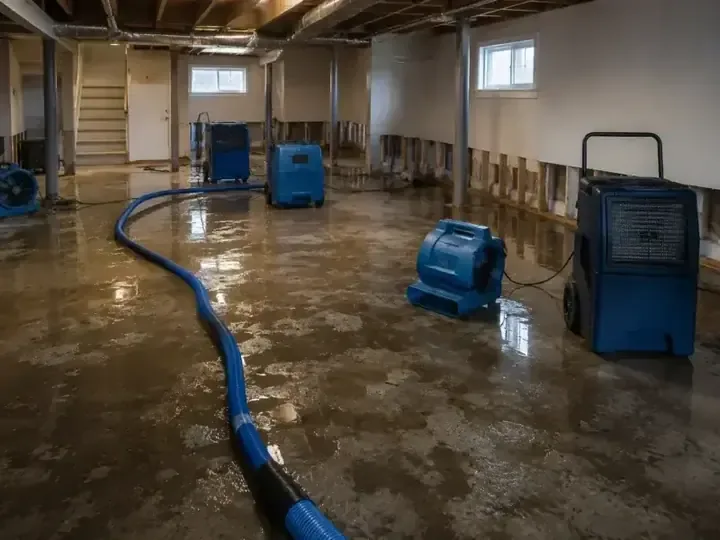
First moves for water extraction and removal
- 1
Stop the source
Close the main valve or the fixture valve, and unplug a running sump pump only if the outlet is dry.
- 2
Stay clear of outlets
Keep people and pets out of standing water near cords, outlets and floor-level electronics.
- 3
Lift what you can
Move rugs, boxes and furniture legs off wet carpet to stop stains and rust rings.
- 4
Photograph first
Take wide shots and close-ups of each wet room before anything is moved.
How water extraction and removal is handled in Marlton, NJ
Each step follows the IICRC S500 drying standard and leaves a record for the claim file.
- 1
Find the edges
Meters and thermal imaging show how far the water spread, including under walls.
- 2
Extract
Truck-mounted extraction pulls water from carpet, pad and hard floors, deepest areas first.
- 3
Decide what stays
Pad, trim and contaminated carpet come out; clean carpet often stays and dries in place.
- 4
Dry and log
Air movers and LGR dehumidifiers go in, and readings are logged daily until dry.
What does water extraction and removal cost in Marlton, NJ?
In Marlton, NJ, water extraction typically runs $900 to $8,000, depending on how many rooms are wet, whether the water is clean or contaminated, the flooring and how deep the water stands.
One room, clean water
$900 to $1,800
- Truck-mounted extraction
- Pad removal if needed
- Moisture readings
Several rooms or a stairway
$1,800 to $4,000
- Weighted carpet extraction
- Baseboard checks
- Drying setup
Whole lower level
$4,000 to $8,000+
- Slab extraction and pumping
- Carpet and pad removal
- Extended drying
Ranges move with the water category, the square footage, the material class and how fast drying started. For a planning number, run the water damage cost calculator.
Extraction is the cheapest drying there is. Every gallon the extraction crew pulls out as liquid is a gallon the dehumidifiers never have to pull out of the air, which is why the first visit spends real time on the floor before any air mover turns on.
How water extraction works in a basement or living room
The crew starts at the deepest water and works toward the doors. On carpet, a weighted extraction tool presses down on the pad so water rises out of it instead of staying trapped underneath. On a basement slab or tile, a squeegee wand and a submersible pump move water faster than any shop vacuum.
- Truck-mounted units carry the most suction and keep the water in a tank outside the house.
- Portable extractors reach townhome stairs, condos and spots a hose cannot.
- Pinless meters show where water traveled under baseboards and into the next room.
Carpet and pad decisions during water extraction
Clean Category 1 water caught early often lets the carpet stay. Pad soaks up water like a sponge and is cheap, so the crew usually pulls it and dries the carpet in place over the subfloor. Category 2 water from a washer or a sump pit that sat, and any Category 3 water from sewage or storm runoff, means the carpet and pad go to the curb.
The sump pump failure page covers basement overflow, and sewage backup cleanup covers floor drains.
Why fast water extraction matters in local homes
Many houses in the township sit over a seasonal high water table, and many have finished lower levels with carpet laid over a concrete slab. Water left on that slab keeps feeding the walls and the bottom plate for days. Mold can start in 24 to 48 hours, so the extraction crew treats water that is still spreading as urgent, 24/7.
For flood safety basics, see Ready.gov on floods, and for indoor air after a leak, the EPA indoor air quality pages.
Rule of thumb: water removed as liquid takes minutes; water left to evaporate takes days of equipment time.
Water extraction and removal across the township and nearby towns
The response team covers ZIP 08053 across Evesham Township, 24/7, from the historic village on Main Street and the Route 70 and Route 73 corridors to Kings Grant, Marlton Lakes, Tomlinson Mill, Woodstream and Greentree.
Nearby coverage reaches Cherry Hill, Mount Laurel, Medford, Voorhees, Haddonfield, Berlin.
Related water damage services nearby
Water Extraction and Removal questions
Short, plain answers on water extraction and removal, from the first call to the last moisture reading.
Walk dispatch through what you seeCan a shop vacuum do the same job as water extraction?
Not for more than a small spill. A shop vacuum skims the surface, while weighted truck-mounted extraction pulls water out of the pad and carpet backing, which cuts days off drying.
Will the carpet be saved after extraction?
Often, when the water is clean and drying starts within a day or two. The pad is usually replaced. Carpet touched by Category 2 water that sat, or by any Category 3 water, is removed.
How long does extraction take?
Most single-room jobs take a few hours, and a flooded lower level can take most of a day. The crew keeps extracting until the meters show the floor is no longer holding water extraction can lift.
What happens after the water is extracted?
The drying team sets air movers and dehumidifiers, and the tech who does the walkthrough takes readings every day until materials reach the drying goal under the IICRC S500 standard.
Does the water need to be tested?
The category is set from the source: a supply pipe is Category 1, a washer or sump pit overflow is usually Category 2, and sewage or storm runoff is Category 3.
Is water extraction covered by insurance?
Extraction after sudden and accidental water, such as a burst pipe, is often covered, while groundwater and surface flooding are usually not under a standard policy. Check with your own insurer.
Standing water in the house? Pull it out now.
Every hour on the floor sends more water into the pad, the walls and the slab. The extraction crew works around the clock.