Structural Drying and Dehumidification in Marlton, NJ
Dry to the touch is not dry. The drying team sizes air movers and dehumidifiers to the class of loss and keeps them running until framing, subfloor and concrete read within range of a dry reference.
(888) 471-9821Need the structure dried? Call now.- LGR and desiccant drying
- Psychrometric logs
- Readings set the finish
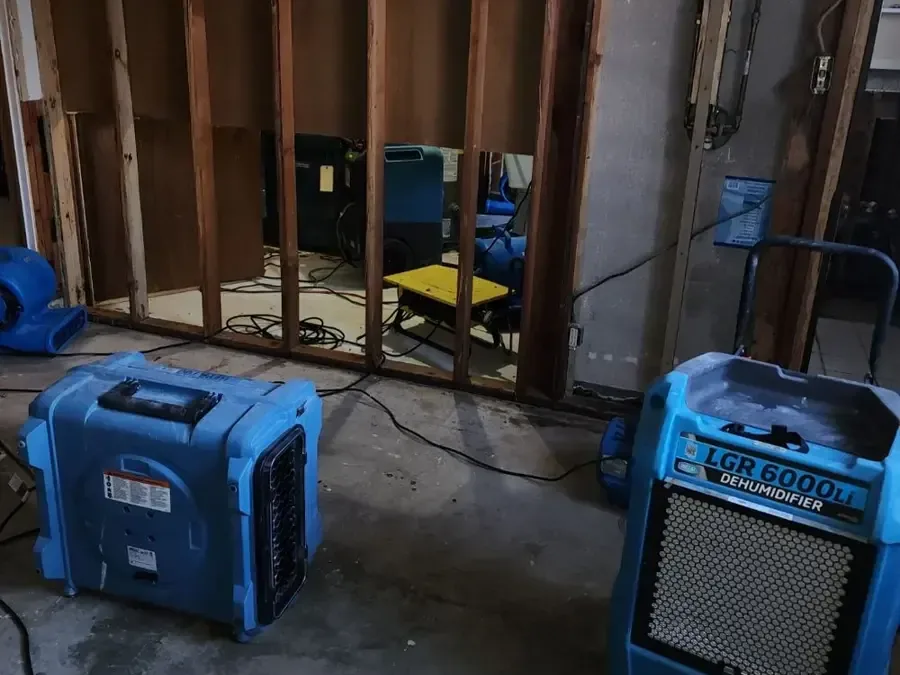
First moves for structural drying and dehumidification
- 1
Keep it closed up
Keep windows shut while dehumidifiers run, unless the crew says otherwise.
- 2
Leave equipment on
Do not switch off air movers or dehumidifiers; they run around the clock.
- 3
Keep the heat steady
Hold the thermostat at a normal setting so drying stays on pace.
- 4
Note any new damp spots
Tell the crew about musty smells or new stains during drying.
How structural drying and dehumidification is handled in Marlton, NJ
Each step follows the IICRC S500 drying standard and leaves a record for the claim file.
- 1
Map and classify
Moisture mapping sets the category and the class of loss.
- 2
Size the equipment
Air movers and dehumidifiers are matched to the evaporation load.
- 3
Log every day
Readings and psychrometric data are recorded daily.
- 4
Finish on the numbers
Equipment leaves when materials reach 2 to 4 points of dry.
What does structural drying and dehumidification cost in Marlton, NJ?
In Marlton, NJ, structural drying typically runs $1,500 to $15,000, depending on the class of loss, how many rooms and levels are wet, whether concrete and block need desiccant drying and how many days the equipment runs.
One or two rooms
$1,500 to $3,500
- Air movers and LGR
- Daily readings
- Psychrometric log
Several rooms or a basement
$3,500 to $7,500
- Cavity drying
- Slab and wall drying
- Extended run time
Class 4, dense materials
$7,500 to $15,000+
- Desiccant dehumidifiers
- Hardwood and concrete
- Long monitoring
Ranges move with the water category, the square footage, the material class and how fast drying started. For a planning number, run the water damage cost calculator.
Structural drying is the part of the job that decides whether the problem comes back. Drywall can feel dry while the stud, the bottom plate or the slab behind it still holds water. The drying team measures the structure, not the surface.
How structural drying works
- Class of loss: Class 1 to 4 sets how much evaporation the room needs and how much equipment goes in.
- Air movers: set along walls and into opened cavities to speed evaporation at the surface.
- Dehumidifiers: LGR units pull that water out of the air; desiccant units handle dense materials and cold basements.
- Psychrometric logs: temperature and humidity inside and outside the drying area show the equipment is working.
- Readings: wet materials are compared each day to a dry reference of the same material in the same house.
Structural drying in basements and block walls
Many local homes have a concrete slab and block foundation walls in the lower level, and many soils in the township keep a seasonal high water table close to the surface. Concrete and block hold a lot of water and release it slowly, and a cool basement slows evaporation. That is where desiccant dehumidifiers and heat earn their place, and why basement drying often runs longer than a main-floor room.
For the work that comes before drying, see water extraction and basement flooding cleanup. A rough timeline for your rooms: the drying time estimator.
When structural drying is finished
Equipment stays until the readings say dry, not until a date on the calendar. The drying goal is wet materials within 2 to 4 points of the dry reference. The final readings and the daily log go into the claim file, so the rebuild contractor and the adjuster can see the structure was dry before walls were closed.
On indoor moisture and air quality: the EPA indoor air quality pages; on how wood holds water: the USDA Forest Products Laboratory.
Structural drying and dehumidification across the township and nearby towns
The response team covers ZIP 08053 across Evesham Township, 24/7, from the historic village on Main Street and the Route 70 and Route 73 corridors to Kings Grant, Marlton Lakes, Tomlinson Mill, Woodstream and Greentree.
Nearby coverage reaches Cherry Hill, Mount Laurel, Medford, Voorhees, Haddonfield, Berlin.
Related water damage services nearby
Structural Drying and Dehumidification questions
Short, plain answers on structural drying and dehumidification, from the first call to the last moisture reading.
Walk dispatch through what you seeWhat does structural drying mean?
Drying the building itself, framing, subfloor, drywall, concrete and block, to measured readings, rather than just drying the surface people can see.
What is the difference between LGR and desiccant dehumidifiers?
LGR units cool the air to pull water out and work well in most rooms. Desiccant units use a drying wheel and work better on dense materials and in cool basements.
How is dry measured?
Wet materials are compared each day with a dry reference of the same material in the same house. Drying ends when they read within 2 to 4 points of it.
Why is the equipment so loud?
Air movers push a lot of air to speed evaporation. The noise is part of drying quickly, and most jobs run three to seven days.
Can I turn the equipment off at night?
Please do not. Drying runs around the clock, and stopping lets humidity rise and slows the job.
Does structural drying prevent mold?
Drying the structure quickly and fully removes the water mold needs. Mold can start in 24 to 48 hours, which is why drying starts as soon as possible.
Dry the structure, not just the surface.
Water left in framing, slabs and block walls is what brings the problem back. The drying team measures it and dries it, 24/7.