Structural Drying in Stratford, NJ
After the water is out, the building is still wet inside its walls, floors and framing. The drying team places equipment by the extent of the loss and reads moisture until the structure is dry.
(888) 471-9821Start the drying plan in Stratford- LGR dehumidifiers
- Wall cavity drying
- Psychrometric readings
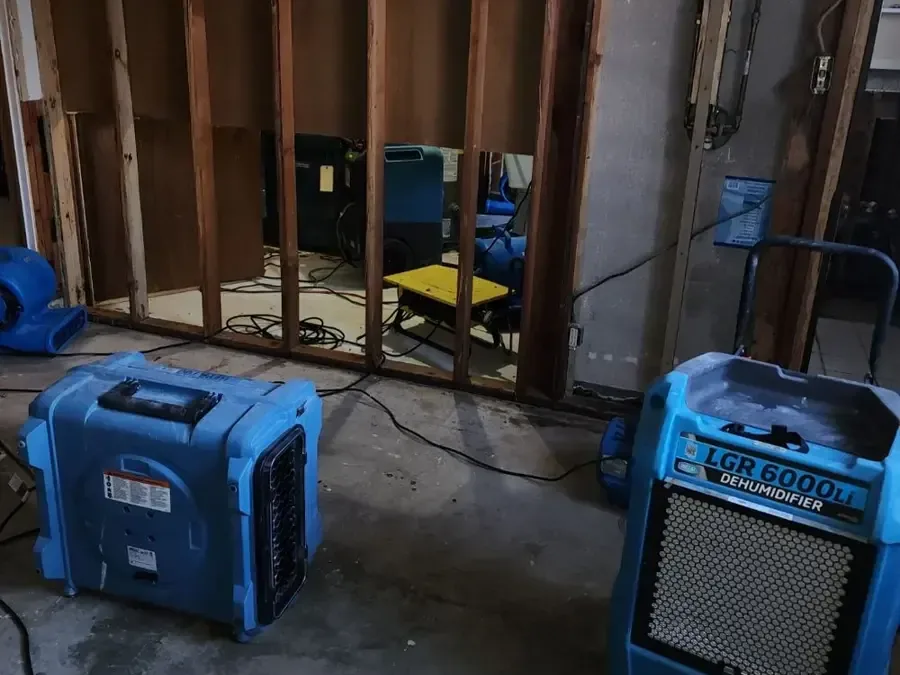
First moves for structural drying and dehumidification
- 1
Report the wet areas
List every room that felt damp or smelled musty so none is missed.
- 2
Stay out of the equipment path
Keep children and pets away from running machines and cords.
- 3
Keep doors and windows closed
A closed building lets the dehumidifiers work properly.
- 4
Do not move equipment
Leave the setup as placed, since each machine has a role.
How structural drying and dehumidification is handled in Stratford, NJ
Each step follows the IICRC S500 drying standard and leaves a record for the claim file.
- 1
Map the moisture
Cameras and meters mark every wet surface.
- 2
Place the equipment
Air movers and dehumidifiers are set by the class of loss.
- 3
Read and adjust
Readings drive changes at every visit.
- 4
Confirm dry
A final reading shows the structure meets the dry goal.
What does structural drying and dehumidification cost in Stratford, NJ?
Drying cost follows the number of rooms, the density of the materials and how long the equipment must run. A small loss that was extracted early sits at the bottom, and the densest materials and longest runs sit at the top of the range.
One or two rooms
$1,500 to $3,500
- Air movers and LGR
- Daily readings
- Psychrometric log
Several rooms or a basement
$3,500 to $7,500
- Cavity drying
- Slab and wall drying
- Extended run time
Dense materials, long runs
$7,500 to $15,000+
- Desiccant dehumidifiers
- Hardwood and concrete
- Long monitoring
Ranges move with the water category, the square footage, the material class and how fast drying started. For a planning number, run the water damage cost calculator.
Drying is a physics problem. Water has to move out of dense material and into the air, and the air has to be dried fast enough that the water keeps moving. Equipment alone does not do it. Measurement does.
Why older houses need patience
Census data puts the median home build year in the borough near 1961. Houses of that age often have plaster, layered finishes and framing that holds water longer than newer materials do, so wet framing and wall cavities are common in older houses and need careful, repeated readings.
- Wall cavities are opened or drilled so air can move through them.
- Framing and subfloors are tracked until they match unaffected material.
- Plaster and layered finishes are probed with meters, since the surface can look dry first.
How the drying is planned
Thermal cameras and meters map the wet area, and the class of loss decides the equipment. LGR dehumidifiers handle most jobs, and desiccant units take over when materials are dense or the conditions are tough. Air movers are placed to sweep every wet surface.
The class of loss matters, because a small wet area calls for different equipment than a soaked lower level. Placement follows the room, the airflow and the materials, and it is revised at each visit.
Sealed spaces behind cabinets, under tubs and inside closets are checked as well, because pockets of moisture there can keep a building damp. A drying plan that misses them leaves smells and stains behind.
Checking the structure is dry
- The dry goal comes from unaffected material of the same type.
- Equipment is removed only when readings reach that goal.
At each visit the crew reads the materials and the air, adjusts the setup and logs the numbers. Equipment leaves only when readings match the dry goal. For a loss that began with standing water, start with water extraction, and for a hardwood floor see hardwood floor water damage.
Structural drying and dehumidification across Stratford and nearby towns
Structural drying covers houses in Old Stratford and Laurel Mill Farms, from Union Avenue to Warwick Road, buildings with two or more units and the commercial buildings along the White Horse Pike.
The same service nearby: structural drying and dehumidification in Marlton, Somerdale, Lindenwold.
Related water damage services in Stratford
Structural Drying and Dehumidification questions
Short, plain answers on structural drying and dehumidification, from the first call to the last moisture reading.
Walk dispatch through what you seeHow do you know when the building is dry?
Readings on the framing and subfloor match unaffected material of the same type, and the log shows it over time.
Why are walls drilled or opened?
Air has to reach the inside of the cavity, where insulation and framing hold water longest.
Can I run a household fan instead?
A fan moves air, but without dehumidification it only spreads the moisture around.
Why does the house feel humid during drying?
Equipment pulls moisture out of materials, and the dehumidifiers collect it. The air should get drier as the work proceeds.
Will the equipment run up the electric bill?
It does draw power, and the crew keeps the setup efficient and removes it when readings allow.
Why does drying take several visits?
Moisture leaves dense materials slowly, so the crew returns to read, adjust and move equipment until the readings stop falling.
Is mold a risk while the building dries?
It can be when materials stay wet for a day or two, which is why drying starts quickly and wet material that cannot dry is removed.
A damp building dries only when it is measured
Tell the crew where the water was and what it soaked, and the drying plan will follow the readings.