Hardwood Floor Water Damage in Lindenwold, NJ
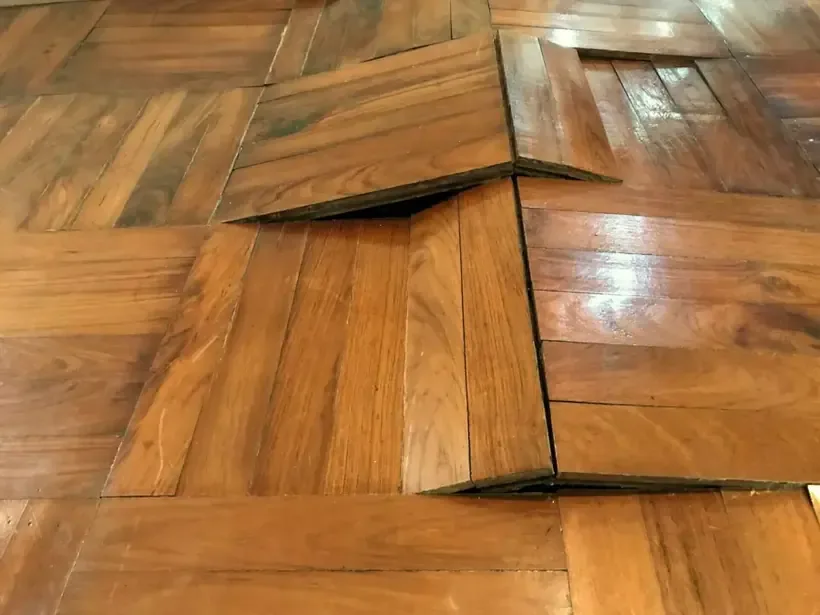
Hardwood cups and buckles when water gets underneath it. The drying crew pulls the moisture out through mat systems and removes boards only when drying cannot save them.
(888) 471-9821Call about the wet wood floor- Floor mat drying systems
- Subfloor readings taken
- Boards removed last
First moves for hardwood floor water damage
- 1
Lift what you can
Raise rugs, furniture legs and anything sitting on the wet boards so air can reach them.
- 2
Blot, do not scrub
Blot standing water with towels, but skip scrubbing or heating the floor, which can drive water deeper.
- 3
Keep the room steady
Keep the room ventilated and the thermostat steady while waiting for the drying crew.
- 4
Photograph the boards
Capture cupping, gaps and stains now so progress can be compared later.
How hardwood floor water damage is handled in Lindenwold, NJ
Each step follows the IICRC S500 drying standard and leaves a record for the claim file.
- 1
Read the wood
Meters check boards and subfloor to set the drying plan.
- 2
Set the mats
Floor mat systems and dehumidifiers start pulling moisture.
- 3
Watch the readings
Equipment is adjusted so the wood dries evenly without cracking.
- 4
Decide on boards
Anything that will not settle is removed in sections.
What does hardwood floor water damage cost in Lindenwold, NJ?
Hardwood costs depend on whether the boards can be dried in place. One room dried with mats costs far less than a hallway or several rooms, and board replacement raises the total.
One room, dried in place
$1,500 to $4,000
- Floor mat system
- Daily wood readings
- Dehumidifier running
Several rooms or a hallway
$4,000 to $8,000
- Mats and air movers
- Subfloor drying
- Space below checked
Boards replaced
$8,000 to $15,000+
- Board removal
- Subfloor dried
- Contents handled
Ranges move with the water category, the square footage, the material class and how fast drying started. For a planning number, run the water damage cost calculator.
Wood absorbs water from below as easily as from above, and it swells as it does. Boards that cup at the edges or buckle off the subfloor are showing that moisture has gotten under them, and speed decides whether they can be saved. Gaps between boards after drying are common as the wood shrinks back, and the crew tracks them rather than treating them as new damage.
Drying wood in place
Mat systems pull moisture from the surface through a sealed layer while dehumidifiers dry the air. Drying wood too fast can crack it, so the crew watches readings and adjusts equipment rather than running everything at full tilt.
- Readings are taken on several boards each visit and compared with dry reference wood.
- Furniture and rugs come off the floor so air can move over the whole surface.
When boards come out
Boards that stay cupped after drying, that lift from the subfloor or that stained from contaminated water cannot be reliably saved. They are removed in sections, and the subfloor underneath is dried before anything new goes in.
- A flooring installer matches and fits replacement boards once the subfloor reads dry.
- Adjoining rooms are checked so wet boards are not missed along a hallway.
Moisture below the floor
The space under a floor can hold water long after the surface looks fine. When standing water was the cause, the water extraction page covers how it is removed first, and the ceiling below is checked as well.
Refinishing waits until the readings are steady. Sanding or coating wet wood locks moisture in and often leads to the finish failing. Other floors and rooms are handled through water damage services for local homes.
Hardwood floor water damage across Lindenwold and nearby towns
Hardwood floor calls come from houses across Lindenwold, including the streets near Linden Avenue and Berlin Road and the Kirkwood and Lucastown areas, wherever water reached a wood floor in the house.
The same service nearby: hardwood floor water damage in Marlton, Stratford, Somerdale.
Related water damage services in Lindenwold
Hardwood Floor Water Damage questions
Short, plain answers on hardwood floor water damage, from the first call to the last moisture reading.
Get a straight answer from dispatchWhy does hardwood cup after a leak?
Wood absorbs moisture unevenly. The bottoms of the boards swell faster than the tops, and the edges lift into a cup shape.
Can cupped boards flatten again?
Often yes, if they are dried slowly and the cause is stopped. Boards that stay raised after drying are the ones that get removed.
Is a floor with water underneath a different problem?
Yes. Water that gets under hardwood from below is harder to see and dry. Meters and mat systems are used to find and pull the moisture out.
Should I sand the floor right away?
No. Sanding or coating wet wood traps moisture, so refinishing waits until the readings are steady.
Will the crew match the replacement boards?
The crew removes the damaged boards, and a flooring installer matches and fits the new ones once the subfloor is dry.
How long does hardwood take to dry?
It depends on the species, the water and how deeply the wood soaked. Daily readings decide, not a fixed schedule.
Save the boards if they can be dried
Tell the dispatcher what the floor looks like and where the water came from, and the crew will plan mat drying, readings and any removal.