Structural Drying and Dehumidification in Somerdale, NJ
After the water is out, the drying team works on what is left: framing, subfloors, slabs and wall cavities. Air movers and dehumidifiers are sized to the class of loss and run until readings match a dry reference.
(888) 471-9821Building still wet? Call the crew.- Air movers and dehumidifiers
- Daily readings
- Class of loss sets gear
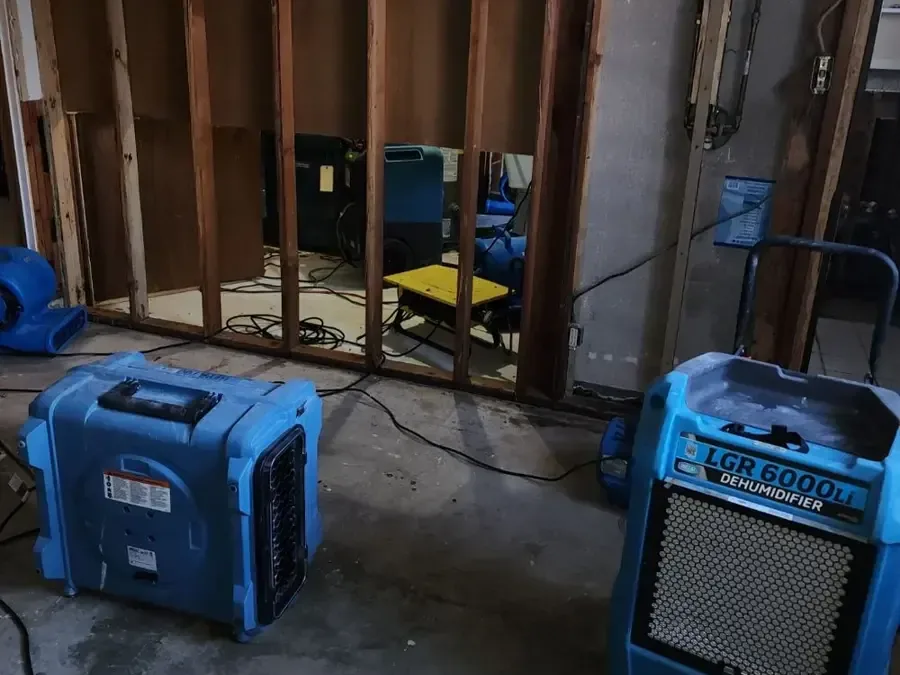
First moves for structural drying and dehumidification
- 1
Leave equipment running
Do not turn off air movers or dehumidifiers early, even when the room feels dry.
- 2
Keep the room closed
Closed doors and windows let the dehumidifiers work on a smaller volume of air.
- 3
Hold the temperature steady
Warm, steady air speeds evaporation, so avoid big swings in the thermostat.
- 4
Keep the log
Photograph meter readings when allowed and keep the daily log for the claim.
How structural drying and dehumidification is handled in Somerdale, NJ
Each step follows the IICRC S500 drying standard and leaves a record for the claim file.
- 1
Map and classify
Meters set the class of loss and mark which materials are wet.
- 2
Place the equipment
Air movers and dehumidifiers are set to each room's load.
- 3
Log every day
Readings are recorded daily and the equipment is adjusted.
- 4
Release at the goal
Equipment leaves when materials match a dry reference.
What does structural drying and dehumidification cost in Somerdale, NJ?
Structural drying here typically runs $1,500 to $15,000 or more. The number of rooms, the materials involved, how deep the moisture went and how many days the equipment runs set the total, and dense materials cost more.
One or two rooms
$1,500 to $3,500
- Air movers and LGR units
- Daily readings
- Psychrometric log
Several rooms or a lower level
$3,500 to $7,500
- Cavity drying
- Slab and wall drying
- Longer run time
Class 4, dense materials
$7,500 to $15,000+
- Desiccant dehumidifiers
- Hardwood and concrete
- Long monitoring
Ranges move with the water category, the square footage, the material class and how fast drying started. For a planning number, run the water damage cost calculator.
A floor that feels dry can still hold water in the subfloor, the bottom plate and the slab. Structural drying removes that hidden moisture on a schedule, with readings every day, and it is what keeps a wet building from turning into a mold and rot problem.
Drying is also the step that decides whether mold gets a chance. Materials that stay damp past 24 to 48 hours give it room to start, which is why the equipment runs around the clock until the readings say stop.
How drying equipment is chosen
The class of loss and the materials decide the gear, not the size of the stain. Dense materials give water up slowly and need more drying power.
- Air movers set to the evaporation load of each room.
- LGR dehumidifiers for most clean water losses.
- Desiccant units when concrete, hardwood or cool conditions slow the drying.
What gets measured in Somerdale homes
Moisture meters, a thermal camera and a psychrometer track what the materials and the air are doing. Each day's readings go in a log, and equipment is adjusted or removed when the log shows the goal has been met.
Drying walls, floors and cavities
Wet cavities are opened at the base or with small holes so air can reach them, and equipment is moved as the readings change. Drying starts after water extraction, and large losses such as storm and flash flood cleanup usually run longer. A slab, a hardwood floor or a heavy wall assembly may need desiccant units and a longer run than a carpeted room.
The log and the final readings go into the claim file, which shows the adjuster that the structure was dried and not just the surface.
Structural drying and dehumidification across Somerdale and nearby towns
Drying crews work across Somerdale, from homes and rentals on the East Side and the West Side to buildings along the White Horse Pike and the streets near Passanante Park and Kennedy Boulevard.
The same service nearby: structural drying and dehumidification in Marlton, Stratford, Lindenwold.
Related water damage services in Somerdale
Structural Drying and Dehumidification questions
Short, plain answers on structural drying and dehumidification, from the first call to the last moisture reading.
Walk dispatch through what you seeWhy does drying take days after the water is gone?
Water hides in framing, subfloors and concrete, which give it up slowly. Equipment has to keep running until those materials, not just the surface, read dry.
What is the difference between LGR and desiccant dehumidifiers?
LGR units pull moisture from warm, humid air and suit most clean water losses. Desiccant units work in cool conditions and with dense materials such as concrete and hardwood.
How does anyone know a structure is dry?
Meters read the materials and are compared with a dry reference in the same building. Equipment comes out when the readings reach the goal and the daily log shows it.
Is the noise from the equipment normal?
Yes. Air movers and dehumidifiers run all day and night during a dry-out, and the electricity use is part of the cost of drying properly.
Can drying start before the leak is repaired?
The source has to be stopped first. Drying around a live leak only wets the materials again, so the shutoff or repair comes before the equipment goes in.
Wet framing or subfloor? Dry it to readings.
Moisture left in framing and slabs keeps damaging the building after the surface looks fine. The drying team works every day, holidays too.