U.S. Route 30, the White Horse Pike, runs through Somerdale, Stratford and Berlin, and each borough lists business uses along it. A burst pipe, a roof leak or a storm that floods a storefront turns into a lost day for a shop owner, and sometimes a lot more. This post sets out a first day plan for a business owner or property manager: what to do, what the crew does and how to keep the doors open.
Key takeaways
- The White Horse Pike (U.S. Route 30) passes through three boroughs here, and each describes its business uses.
- A business owner's first moves are stopping the water, making power safe, protecting inventory and records and documenting before anything moves.
- Commercial buildings add slabs, suspended ceilings, shared walls and tenants, so the drying plan has to account for each.
- Extraction starts first, and structural drying follows with equipment placed to keep part of the space usable.
- A clear record of readings, photos and repairs helps when a landlord, a manager or an inspector asks questions.
One highway, three boroughs of businesses
The White Horse Pike is the common thread, but each borough describes its businesses a little differently.
Somerdale
The Pike runs through the borough from the Magnolia border to the Stratford border. Retail, service and office properties are listed for sale or lease along it.
Stratford
The Pike is the main commercial road, with car dealers, auto repair shops, banks, diners and restaurants listed on the borough's Shop Local page. Berlin Road and Arlington Avenue also host businesses, including auto repair shops and child care and learning centers.
Berlin
The Pike is the main highway through the borough, and Route 73 brushes the east side. Cross Keys Road is another main corridor.
What commercial water damage looks like
A water loss in a business is rarely one thing. It starts as a pipe, a roof, a drain or a storm, and then it hits flooring, ceilings, stock and equipment all at once.
A business loss also differs from a home loss in what is at stake: stock, equipment and a day's sales as well as the building. Speed matters for the structure and for the owner's calendar.
- Restaurants and diners: a dishwasher hose, an ice machine supply hose or a floor drain that backs up.
- Auto shops and dealers: floor drains, wash bays and supply pipes in service areas.
- Banks and offices: ceiling tile leaks from a pipe or roof, wet carpet and shared walls.
- Child care and learning centers: a bathroom or sink leak that shuts a classroom.
- Storefronts: storm water coming under a door or through a rear entry.
The first hour for an owner or manager
The first hour sets the pace for everything after it. The goal is to stop the water and protect what can be protected.
Items that cannot be saved are set aside, not thrown out, until they are photographed and listed. A clear list is the easiest way to show what the loss included.
- Shut off the water at the nearest valve, or at the main if the source is not clear.
- Turn off power to wet areas from a dry spot, and keep customers and staff out of them.
- Move stock, records and electronics off the floor and away from dripping ceilings.
- Photograph the damage and the source before anything is moved.
- Tell the landlord or property manager, because shared walls and ceilings may be involved.
- Bring in extraction right away so the water stops spreading under flooring and into walls.
Keeping the doors open
Most owners need to reopen before the last damp spot is gone. A good drying plan treats the space in zones.
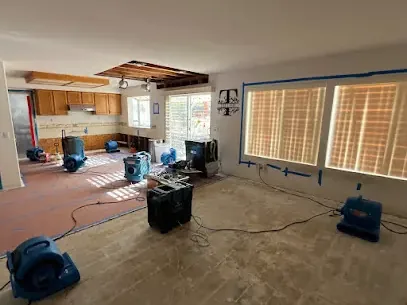
The wettest area is isolated and dried first. Containment keeps dust and moisture from reaching the rest of the space, and the dehumidifiers and air movers go where they affect the least floor area.
- A dry front counter may reopen while the back room is still being dried.
- Equipment cords and hoses are routed so customers can walk safely.
- Noise and heat from equipment are planned around opening hours where possible.
Extraction, removal and structural drying
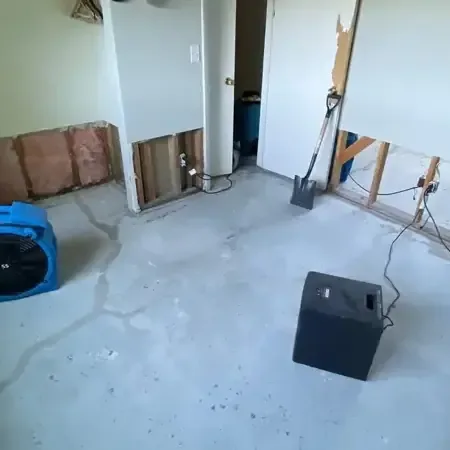
Extraction removes the standing water with pumps and extractors. Then the team maps moisture with a meter and a thermal camera so the drying covers the slab, the wall bottoms and the area above a wet ceiling.
Commercial water damage work in a retail or office unit often means pulling wet carpet, cutting out soaked drywall and removing ceiling tile and insulation. The same steps apply to a commercial water damage job on a restaurant or shop.
Drying a larger floor plate
A wide floor holds a lot of moisture, and structural drying means moving air and removing humidity until the readings return to normal. The meter, not the surface, says when the job is done.
Cleaning and treating what stays
Hard surfaces, counters and framing are cleaned and treated before the area is closed up again. Mold can start within 24 to 48 hours on wet materials, so the first day matters.
Records, inspections and reopening
A clear record is useful for the owner, the landlord and anyone who inspects the space afterward. Somerdale's Fire Marshal inspects businesses before they open, and the Construction Department coordinates applications, permits and inspections.
Berlin's construction office issues permits under the state Uniform Construction Code, with a plumbing and mechanical inspector on staff. An owner can ask the local office which repairs need a permit before work starts.
- Keep dated photos of the damage, the drying equipment and the repairs.
- Save the moisture readings that show the materials reached normal.
- Keep a list of items that were removed or replaced.
- Share the record with the landlord or property manager.
Planning ahead for a water loss
A short plan on paper saves hours when the pressure is on.
A plan also helps new staff. The person on the floor when a pipe lets go is rarely the owner, and a posted list of first steps gets the right actions taken in the right order.
- Mark the main water shutoff and the breaker panel where staff can find them.
- Keep stock and records off the floor in low rooms.
- Write down the landlord, property manager and utility contacts in one place.
- Look at the roof, the drains and the supply hoses before the storm season.
- Check that staff know the first three steps for a leak.
Questions
Which boroughs does the White Horse Pike run through?
U.S. Route 30, the White Horse Pike, runs through three Camden County boroughs: Somerdale, Stratford and Berlin.
What kinds of businesses are along the Pike here?
Retail, service and office properties, car dealers, repair shops, banks, diners and restaurants are all listed along the Pike, with child care and learning centers on nearby roads.
Can a business stay open during drying?
Often in part. The crew isolates the wet area, runs containment and places equipment so the dry part of the space stays usable.
Who needs to be told about a water loss?
The landlord or property manager should be told right away, because shared walls, ceilings and building systems may be involved.
Does a repair need a permit?
That depends on the work. The local construction office can say which repairs need a permit, and Somerdale's Fire Marshal inspects businesses before they open.