Structural Drying and Dehumidification in Berlin, NJ
Extraction removes the water, but the building still holds moisture in framing, subfloors and concrete. Dehumidifiers and air movers pull it out on a plan built from daily readings until the numbers match a dry reference.
(888) 471-9821Berlin drying equipment help- LGR and desiccant units
- Daily psychrometric logs
- Dry reference targets
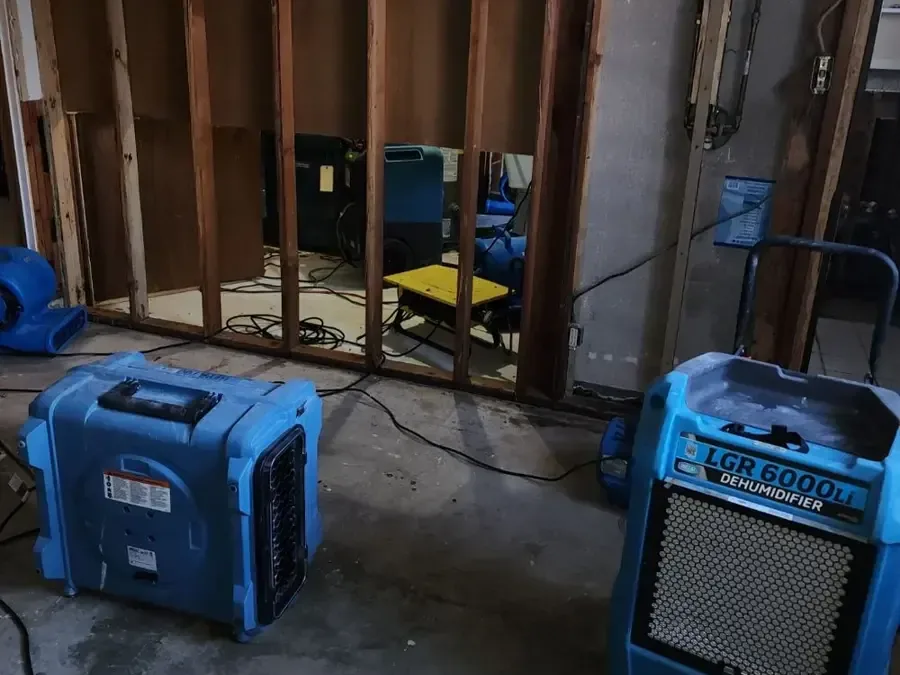
First moves for structural drying and dehumidification
- 1
Leave it running
Keep dehumidifiers and air movers on, since stopping early leaves moisture in the framing.
- 2
Close the doors
Closed doors keep the drying zone tight so the machines work on the wet rooms.
- 3
Mind the cords
Cords and hoses cross floors, so pets and visitors need to step carefully.
- 4
Report changes
If a musty smell, new stain or wet spot appears, tell the tech at the next reading.
How structural drying and dehumidification is handled in Berlin, NJ
Each step follows the IICRC S500 drying standard and leaves a record for the claim file.
- 1
Set the target
A dry reference reading from an unaffected area sets the goal.
- 2
Place equipment
Air movers and dehumidifiers go in on a layout for each room.
- 3
Read and adjust
Meters and a psychrometer drive changes at every visit.
- 4
Confirm and remove
Equipment leaves only when all readings meet the target.
What does structural drying and dehumidification cost in Berlin, NJ?
One or two rooms often cost $1,500 to $3,500 to dry. A basement or several rooms raises it, and dense materials such as hardwood and concrete need desiccant equipment and longer monitoring.
One or two rooms
$1,500 to $3,500
- LGR and air movers
- Daily meter checks
- Humidity log kept
Several rooms or a lower level
$3,500 to $7,500
- Cavity drying
- Slab and wall readings
- Longer run time
Dense materials, Class 4
$7,500 to $15,000+
- Desiccant dehumidifiers
- Hardwood and concrete drying
- Extended monitoring
Ranges move with the water category, the square footage, the material class and how fast drying started. For a planning number, run the water damage cost calculator.
Drying is physics and airflow, not guesswork. Water that soaked into studs, sill plates, subfloors and concrete leaves slowly, and it only leaves on schedule when the air around it is dry and moving. The drying team builds that environment and measures it every day. A room can feel dry to the touch long before the framing behind it is.
Houses from different eras
Housing in the borough runs from 307 units built before 1939 to 745 built from 2000 to 2010, and the county hazard plan says about one in four homes were built in the 2000s. Old plaster, thick timber and newer engineered lumber and drywall do not dry at the same rate, so each building gets its own plan.
- Dense materials such as hardwood and concrete need longer runs or desiccant units.
- Newer assemblies with insulation and vapor barriers can trap moisture and are opened for access.
What gets measured
Moisture meters read wood and drywall, thermal cameras show temperature differences that reveal damp areas, and a psychrometer tracks temperature and humidity in the room. Readings are logged each visit, and equipment is adjusted as materials dry.
- Dry reference readings from an unaffected area set the target.
- Equipment is moved or removed as rooms finish, not run on a fixed schedule.
- Hidden pockets, such as wall cavities and the space under cabinets, get their own air movers.
Finishing the job
Equipment comes out only when readings match the target in every affected material. The log then goes to the adjuster as proof the building is dry. See water extraction for the step that comes first and hardwood floor water damage for wood-specific work.
Structural drying and dehumidification across Berlin and nearby towns
Drying runs across the borough, from the historic district around Washington Avenue to houses, apartments and small buildings near Franklin Avenue, Cross Keys Road, the White Horse Pike and Route 73.
The same service nearby: structural drying and dehumidification in Marlton, Lindenwold, Stratford.
Related water damage services in Berlin
Structural Drying and Dehumidification questions
Short, plain answers on structural drying and dehumidification, from the first call to the last moisture reading.
Walk dispatch through what you seeWhy does drying take several days?
Water that soaked into wood and concrete leaves slowly, and pushing it out too fast can damage the material. Readings show when each area has actually reached the target.
What is the difference between LGR and desiccant units?
LGR dehumidifiers work well in warm rooms with normal humidity. Desiccant units pull moisture in cooler or very wet conditions and are used for dense materials like hardwood and concrete.
Do older houses dry differently from newer ones?
Yes. The borough has 307 housing units built before 1939 and 745 built from 2000 to 2010, and thick old framing and plaster dry at a different rate than newer lumber and drywall.
Can equipment be removed once the surface feels dry?
No. Surfaces can feel dry while framing and subfloors still hold water. The drying team removes equipment only when readings in every affected material match the dry reference.
Is the equipment loud?
Yes, mostly a steady hum. Machines are sized to the job and removed as soon as each room reaches its target.
Dry the framing, not just the surface
The drying team sets equipment from moisture readings, adjusts it at every visit and removes it only when the structure is dry.