Structural Drying and Dehumidification in Haddonfield, NJ
Once the standing water is gone, the real work is the moisture left in framing, wall cavities and floors, and the drying team removes it with air movers and dehumidifiers while logging readings.
(888) 471-9821Haddonfield drying equipment help- LGR dehumidifiers
- Cavity drying
- Logged moisture readings
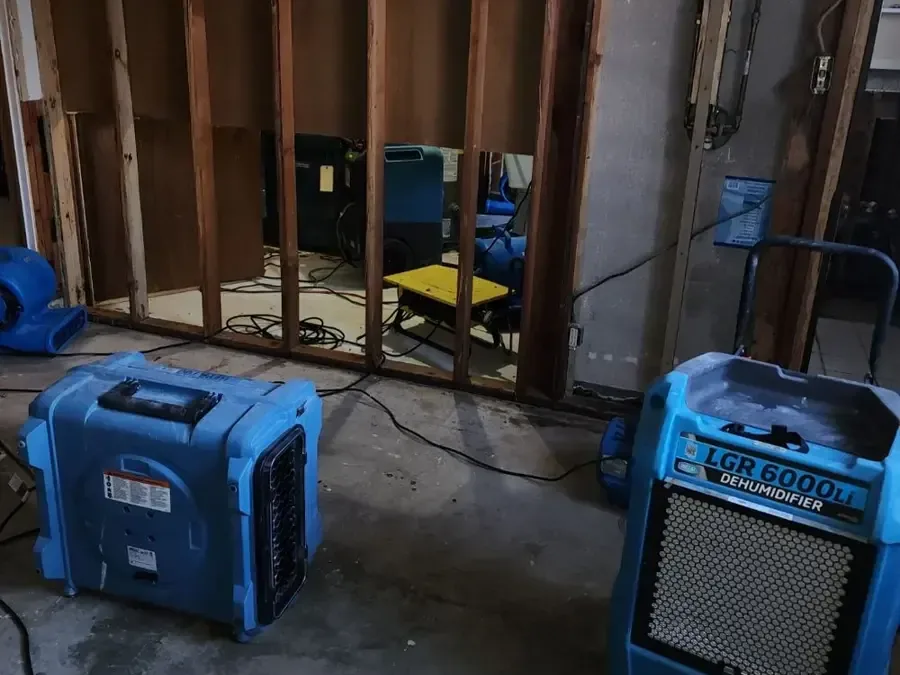
First moves for structural drying and dehumidification
- 1
Finish extraction first
Standing water comes out before drying starts, because dehumidifiers cannot dry a flooded floor.
- 2
Keep doors and windows shut
Closed rooms let dehumidifiers work on the wet space and not on outside air.
- 3
Leave equipment running
Fans and dehumidifiers stay on until the drying team reads the materials dry.
- 4
Save the paperwork
Keep the daily log for the adjuster and the repair contractor.
How structural drying and dehumidification is handled in Haddonfield, NJ
Each step follows the IICRC S500 drying standard and leaves a record for the claim file.
- 1
Measure first
Meters and thermal cameras set the starting readings for every room.
- 2
Place equipment
Air movers and dehumidifiers go where the readings point.
- 3
Monitor each visit
Readings are logged and the equipment is adjusted.
- 4
Release the job
Drying ends when materials match dry reference spots.
What does structural drying and dehumidification cost in Haddonfield, NJ?
Structural drying usually runs $1,500 to $3,500 for one or two rooms, $3,500 to $7,500 for several rooms or a lower level and $7,500 to $15,000+ for dense materials that need desiccant units.
One or two rooms
$1,500 to $3,500
- LGR and air movers
- Readings each visit
- Humidity log
Several rooms or lower level
$3,500 to $7,500
- Cavity drying
- Floor and wall drying
- Longer equipment run
Dense materials, Class 4
$7,500 to $15,000+
- Desiccant units
- Hardwood and concrete
- Close monitoring
Ranges move with the water category, the square footage, the material class and how fast drying started. For a planning number, run the water damage cost calculator.
Drying is not a matter of leaving fans on. It is a measured process, and Haddonfield has many older houses where wall cavities and floor systems can hold moisture in places a quick look does not reach. The goal is a building that reads dry, not one that merely looks dry.
Reading older construction
Colonial-era and Victorian-era homes around the historic district can have layered walls and floors that were added to over many decades. The tech who does the walkthrough checks cavities and floors with meters and documents each reading so progress is clear.
- Plaster, lath and later drywall layers can dry at different rates.
- Cavities are opened only where readings show water trapped.
Equipment that does the work
LGR dehumidifiers pull water vapor from the air, air movers push dry air across wet surfaces, and desiccant units handle dense or very wet materials. The crew sets the mix to the room volume and the materials involved. Equipment placement is rechecked each visit as rooms dry out unevenly.
- Hardwood, concrete and plaster hold water longest and are slowest to dry.
- Thermal cameras show cold, wet areas behind finished surfaces.
- Containment with plastic can keep drying air focused on the wet area.
Daily readings, a clear finish
At each visit the drying team records temperature, humidity and moisture content, and adjusts the equipment. Drying is finished only when materials match dry reference spots, not when they feel dry to the hand. If a reading stalls, the equipment is moved, added or swapped for a different type until the trend turns downward again.
Structural drying follows water extraction or a leak repair, and the logs support the claim. For tank leaks see water heater leak cleanup.
Structural drying and dehumidification across Haddonfield and nearby towns
Drying work covers the borough, from houses in the Haddonfield Historic District to homes near Haddon Avenue, Grove Street and Wallworth Park, and shops and offices along Kings Highway near the PATCO station.
The same service nearby: structural drying and dehumidification in Marlton, Somerdale, Stratford.
Water damage restoration in Haddonfield · every town covered
Related water damage services in Haddonfield
Structural Drying and Dehumidification questions
Short, plain answers on structural drying and dehumidification, from the first call to the last moisture reading.
Walk dispatch through what you seeIs drying different from extraction?
Yes. Extraction removes liquid water. Drying removes moisture already inside materials, which takes controlled airflow and dehumidification and much more time.
How is dryness proven?
Moisture meters read materials against dry reference readings from unaffected areas, and the daily log shows the trend. Feeling dry is not enough.
Why are walls sometimes opened?
Wet insulation and trapped cavities dry slowly or not at all with the wall closed. A small opening or a few drilled holes let air move through.
Why is the equipment loud?
Dehumidifiers and air movers run continuously and warm the room a little. The airflow and heat speed up evaporation, which shortens the job.
Can a house dry without removing materials?
Often, when the water was clean and the materials are sound. Saturated pad, insulation and swollen particleboard usually have to go.
What if drying stops too early?
Moisture left in framing can lead to odors, warping and mold. The reference readings exist to prevent that.
Dehumidifier planning
A short call about which rooms are wet, what the water was and how the readings look gives the drying team the data to size the equipment.