Hardwood Floor Water Damage in Haddonfield, NJ
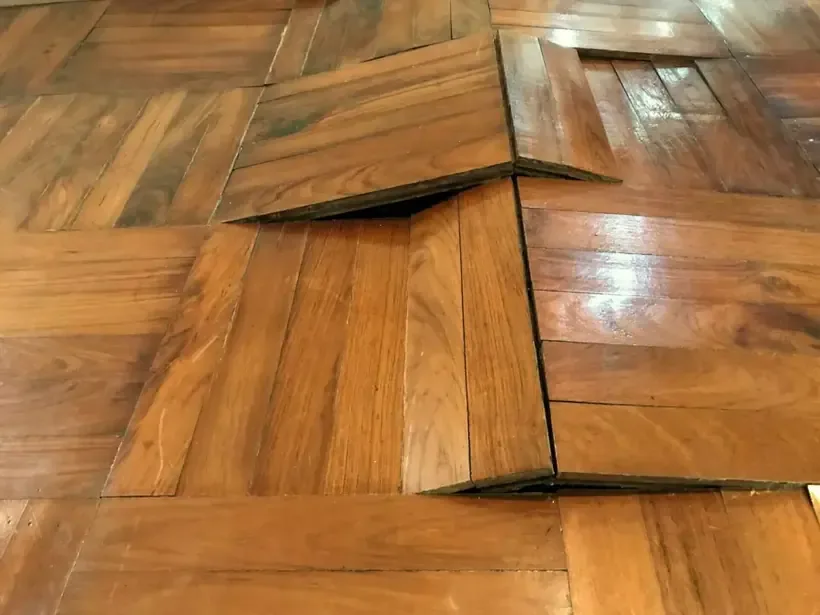
Water under or on a hardwood floor makes boards cup and buckle, and the drying team tries to save the floor with mats and dehumidifiers before any board is pulled.
(888) 471-9821Call about a wet wood floor- Floor mat drying systems
- Board moisture mapping
- Subfloor checks
First moves for hardwood floor water damage
- 1
Remove standing water
Mop or wet-vac the surface, and pull rugs and mats off the wood.
- 2
Keep traffic off
Stay off cupping boards and lift furniture legs off the wood.
- 3
Do not seal it
Skip wax, paint or plastic over wet boards, which traps moisture inside.
- 4
Photograph the floor
Capture cupping, stains and the water source for the claim.
How hardwood floor water damage is handled in Haddonfield, NJ
Each step follows the IICRC S500 drying standard and leaves a record for the claim file.
- 1
Map the moisture
Meters check boards and subfloor to see where the water went.
- 2
Set the mats
Floor mat systems and air movers start pulling moisture out.
- 3
Watch the boards
Cupping and readings are checked at each visit.
- 4
Decide and finish
Boards that dry flat stay, and failed ones are replaced.
What does hardwood floor water damage cost in Haddonfield, NJ?
Hardwood floor water damage usually runs $1,500 to $4,000 for one room dried in place, $4,000 to $8,000 for several rooms or a hallway and $8,000 to $15,000+ when boards are replaced.
One room, dried flat
$1,500 to $4,000
- Mat drying system
- Board readings each visit
- LGR dehumidifier
Several rooms or hall
$4,000 to $8,000
- Mats and air movers
- Subfloor drying
- Space below checked
Boards replaced
$8,000 to $15,000+
- Damaged boards pulled
- Subfloor drying
- Belongings handled
Ranges move with the water category, the square footage, the material class and how fast drying started. For a planning number, run the water damage cost calculator.
Hardwood looks dry long before it is. Water seeps into the seams and under the boards, and the wood absorbs it slowly, so cupping and gaps can appear after the surface has been wiped dry.
Why older houses get checked early
Haddonfield has many older houses, including colonial-era and Victorian-era homes, and floors in homes like these are often worth saving. Census QuickFacts for 2020 to 2024 lists a median owner-occupied home value of $755,300 in the borough.
- Solid wood can be sanded and refinished more than once, which makes drying in place worth attempting.
- Engineered boards tolerate less water and are replaced sooner.
How drying works
The drying team places floor mat systems that pull moisture up and out of the boards, with air movers and dehumidifiers running over the top. Subfloors and, where reachable, the space below are checked too, because moisture can hide beneath.
- A few boards may be removed along an edge to relieve pressure and let air in.
- Readings are logged until the wood returns to its normal level.
When boards have to be replaced
Boards that stay cupped after drying, show black staining or have crumbling edges are replaced. The restoration team plans removal in sections so the matching floor around it is not disturbed more than needed. Board replacement is the last choice, taken only when readings and a close look show drying cannot bring the wood back.
Leaks from washers and dishwashers are a frequent cause, covered under appliance and supply hose leaks, and wider moisture is handled through structural drying.
Hardwood floor water damage across Haddonfield and nearby towns
Wood floor cleanups cover older homes in the Haddonfield Historic District, houses near Haddon Avenue, Grove Street and Wallworth Park, the streets around Borough Hall and ground-floor shops along Kings Highway.
The same service nearby: hardwood floor water damage in Marlton, Somerdale, Stratford.
Water damage restoration in Haddonfield · every town covered
Related water damage services in Haddonfield
Hardwood Floor Water Damage questions
Short, plain answers on hardwood floor water damage, from the first call to the last moisture reading.
Get a straight answer from dispatchCan a wet hardwood floor be saved?
Often, when the water was clean and drying starts quickly. Boards that cup slightly usually flatten again as they dry, though badly swollen or stained boards may need replacing.
When does cupping show up?
It can appear gradually as the wood absorbs water from below. A floor that looks fine the day of a leak can start to cup later, so readings matter more than appearance.
Should the floor be sanded right away?
No. Sanding before the wood is fully dry locks in warping and can trap moisture. Refinishing comes after the readings return to normal.
What if the water came from beneath?
A leak under the floor soaks the boards from below, which is harder to see. The team checks the subfloor and the space below where it can be reached.
Do engineered floors react differently?
Yes. Engineered boards have layers that can separate when wet, so they tolerate less water and are replaced sooner than solid hardwood.
Will insurance cover the floor?
Sudden water damage is often covered. Photos, readings and a record of the drying attempt help the adjuster decide whether to repair or replace.
Save the boards if possible
A short call about the floor type, the water source and which rooms are wet lets the drying team plan a mat system and readings.