Water Heater Leak Cleanup in Stratford, NJ
A water heater that fails can empty a full tank onto the floor, then keep leaking until it is shut off. The cleanup crew extracts the water and dries the floor, the wall bottoms and anything stored nearby.
(888) 471-9821Dry out the tank leak- Tank water extraction
- Wall base drying
- Moisture readings
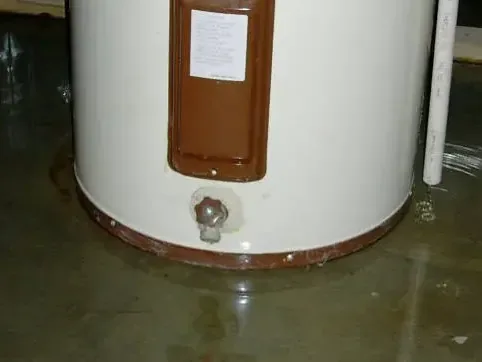
First moves for water heater leak cleanup
- 1
Shut off the supply
Close the cold water valve above the tank and switch off the power or gas feed.
- 2
Drain the tank
Open the drain valve to a hose or bucket only if it is safe to do so.
- 3
Photograph the leak
Record the tank, the water and the wet items before cleanup begins.
- 4
Move the stored items
Lift boxes and tools off the floor, and keep hot surfaces and wet outlets apart.
How water heater leak cleanup is handled in Stratford, NJ
Each step follows the IICRC S500 drying standard and leaves a record for the claim file.
- 1
Extract the water
The pooled water is pulled off the floor first.
- 2
Remove the wet
Soaked pad, trim and wall bottoms are cut out if needed.
- 3
Dry with equipment
Air movers and dehumidifiers run until readings fall.
- 4
Confirm and record
Readings and photos are logged for the claim.
What does water heater leak cleanup cost in Stratford, NJ?
A tank in an unfinished space costs the least, because concrete and hard floors dry fast once the water is out. Finished floors and walls near the tank add removal and drying time and raise the total.
A garage or unfinished basement
$1,000 to $3,000
- Extraction
- Slab drying
- Moisture readings
A closet or finished basement
$3,000 to $6,500
- Flooring and pad removal
- Wall bottom drying
- Dehumidification
Main floor into the basement
$6,500 to $12,000+
- Subfloor and ceiling drying
- Cabinet checks
- Contents handling
Ranges move with the water category, the square footage, the material class and how fast drying started. For a planning number, run the water damage cost calculator.
A water heater leak is a slow one until it is not. A tank holds a lot of water, and when the bottom rusts through or a valve fails, all of it ends up on the floor, then spreads to the walls and out of the room.
What the leak soaks
Water pools under the tank first, then moves to the nearest drain or low spot. Flooring, baseboards and the bottom of drywall wick it upward, and boxes and tools stored beside the tank soak it up.
- Concrete floors dry well once the water is out, while carpet and pad usually come up.
- Wall bottoms are checked with a meter, because drywall can look dry and still be wet inside.
Old tanks fail at the base, where sediment and rust collect, so the first sign is often a slow weep that wets the floor for days.
Doing the work safely
Shut off the water supply to the tank and the power or gas feed before touching anything. A plumber should handle the repair or replacement. The cleanup crew extracts, removes what cannot dry and sets equipment.
Gas and electric units need different shutoff steps, and a plumber or the utility should relight or reconnect them.
When the leak reaches other floors
If the tank sits above finished space, water can travel down to the ceiling below. See ceiling leak water damage for that, and water extraction for the floor-level work. A tank in a closet or on a main floor can leak into the floor structure, so the subfloor and wall cavities get readings as well.
Water heater leak cleanup across Stratford and nearby towns
Water heater cleanups cover homes across Old Stratford, the Laurel Mill Farms area and the neighborhoods near Union Avenue, plus small shops and offices on Berlin Road and Arlington Avenue.
The same service nearby: water heater leak cleanup in Marlton, Somerdale, Lindenwold.
Related water damage services in Stratford
Water Heater Leak Cleanup questions
Short, plain answers on water heater leak cleanup, from the first call to the last moisture reading.
Run the details past 24/7 dispatchHow do I know my water heater is leaking?
Puddles under the tank, rust at the base, a rusty drip from the valve and a damp floor nearby are the usual signs.
Is the water from a heater dangerous?
It can be hot for a time, and it carries sediment. Keep clear until it has cooled.
Should the tank be replaced?
A plumber should decide. A tank that has leaked from the bottom is usually replaced.
Does the floor need to come up?
Hard floors often dry in place. Carpet, pad and vinyl backed with soaked subfloor are usually removed.
Will insurance cover a leaking tank?
Policies differ on sudden failures versus long wear, so the adjuster decides. Photographs and readings support the claim.
What should be photographed?
The tank, the connections, the puddle and any wet boxes or finishes, taken before anything is moved.
Can a leak reach the floor below?
Yes. A tank on an upper level can drip through the floor into the ceiling below, so readings are taken there as well.
A leaking tank soaks more than the floor under it
Tell the crew where the tank sits and which finishes are wet, and the extraction and drying plan will follow.