Appliance and Supply Hose Leaks in Haddonfield, NJ
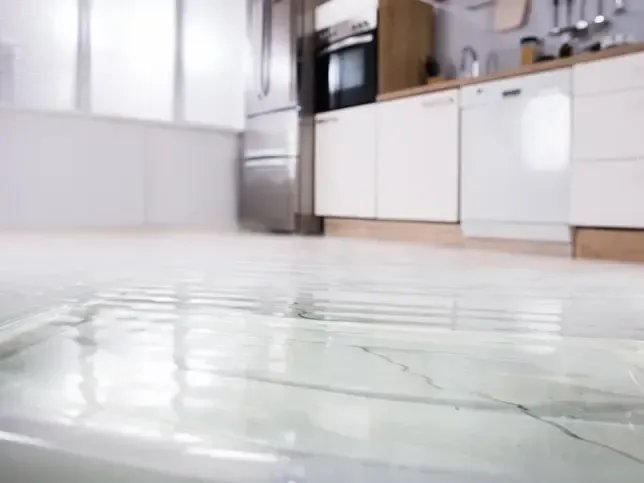
A failed hose or a leaking appliance can soak floors and cabinets before anyone notices, and the drying team extracts the water, opens wet toe kicks and flooring and dries what is left.
(888) 471-9821Call about a leaking appliance- Cabinet base drying
- Hose leak tracing
- Floor moisture checks
First moves for appliance and supply hose leaks
- 1
Shut the valve
Close the shutoff behind the appliance, or the main valve if it will not turn.
- 2
Unplug if safe
Pull the plug only from a dry spot, and turn off the breaker if the floor is wet.
- 3
Mop up what is easy
Soak up water with towels and lift rugs and items off wet flooring.
- 4
Photograph the failure
Capture the hose or appliance, the wet floor and anything damaged before it is moved.
How appliance and supply hose leaks is handled in Haddonfield, NJ
Each step follows the IICRC S500 drying standard and leaves a record for the claim file.
- 1
Find the leak
Meters and cameras trace the water from the failed hose or unit.
- 2
Extract and open
Standing water comes out and wet toe kicks or flooring are exposed.
- 3
Dry the cavities
Air movers and dehumidifiers dry under cabinets and floors.
- 4
Check and release
Readings match dry reference spots before the area is repaired.
What does appliance and supply hose leaks cost in Haddonfield, NJ?
Appliance and hose leaks usually run $1,000 to $3,000 for a laundry room caught fast, $3,000 to $7,000 for kitchen cabinets and floor and $7,000 to $14,000+ for two levels or a slow leak.
Laundry room, found fast
$1,000 to $3,000
- Extraction and wicking
- Floor drying
- Readings each visit
Kitchen cabinets and floor
$3,000 to $7,000
- Toe kick pulled
- Cabinet base drying
- Flooring lifted
Two levels or slow leak
$7,000 to $14,000+
- Ceiling below opened
- Subfloor drying
- Long dehumidifier run
Ranges move with the water category, the square footage, the material class and how fast drying started. For a planning number, run the water damage cost calculator.
Appliance leaks are quiet. A cracked hose behind a washer or a drip from a dishwasher can soak a floor and the cabinet base for a long time before a stain or soft spot shows.
Where the water hides
Water from an appliance runs under flooring, into the cabinet toe kick and along the subfloor, and it can drop into a ceiling below if the room sits over another level. The restoration team uses meters and cameras to follow it.
- Laundry rooms, kitchens and bathrooms are the usual locations, because they hold the water-using appliances.
- Wood and laminate near a leak can cup or swell, which is covered in hardwood floor water damage.
Stopping the source
The first move is closing the shutoff valve behind the unit or the main valve for the house, then unplugging the appliance if the floor is dry enough to do it safely. A plumber or appliance technician replaces the hose or the unit.
- A braided hose that looks fine can still fail at the fitting, so replacement is the real fix.
- Photos of the failed part, and the date it was installed if known, help with the claim.
Dry the structure, not just the floor
After extraction, the crew removes the toe kick or a few inches of cabinet base when readings show trapped moisture, lifts wet flooring and dries the cavity. A slow leak that went unnoticed needs more checking than a sudden failure.
For a tank problem see water heater leak cleanup, and for water that spread into the ceiling below see ceiling leak water damage.
Appliance and supply hose leaks across Haddonfield and nearby towns
Appliance leak cleanups cover kitchens, laundry rooms and bathrooms across the borough, from older homes in the Haddonfield Historic District to houses near Haddon Avenue, Grove Street and Wallworth Park.
The same service nearby: appliance and supply hose leaks in Marlton, Somerdale, Stratford.
Water damage restoration in Haddonfield · every town covered
Related water damage services in Haddonfield
Appliance and Supply Hose Leaks questions
Short, plain answers on appliance and supply hose leaks, from the first call to the last moisture reading.
Ask dispatch what happens nextWhich hoses fail most often?
Washer supply hoses and ice maker or dishwasher connections are common. Hoses harden and crack with age, and a failure can run unseen until water shows up on a floor or ceiling.
Is a slow leak less serious?
No. A slow leak can soak a floor system and cabinet base for a long time, so the damage can exceed a short, sudden burst even though less water appeared at once.
Can cabinets be saved?
Often, if only the base is wet and it is dried promptly. Particleboard that has swelled usually cannot be restored and is replaced.
Does insurance cover appliance leaks?
Sudden failures are often covered. Long-term seepage or lack of upkeep may not be. A dated photo of the failed part and the moisture log help the adjuster decide.
Does the appliance need replacing?
The failed part or the unit is the plumber's or technician's job. The drying team works around that repair so the leak does not restart while the floor is drying.
Water under the cabinets?
A short call about the appliance, the floor type and what sits below helps the drying team plan the extraction and the cabinet drying.