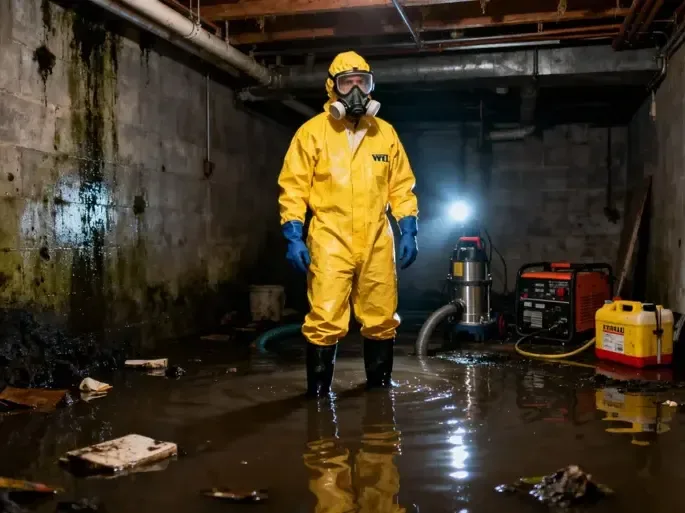
A sewage backup raises a practical question before anything else: whose pipe is it? The borough sewer code answers part of that, and the answer shapes who clears the blockage and what the cleanup involves. This post lays out the confirmed rules for Lindenwold and then walks through the sewage cleanup itself.
Key takeaways
- The Lindenwold Sewer Department maintains and repairs sewer pipes, manholes and pumping stations, but only up to the curbline.
- Residents maintain the connections and cleanouts on their property, and the borough does not maintain a service lateral that the resident owns.
- The sewer code, amended in March 2024, says the borough is not responsible for damage from sewage escaping from pipes or fixtures on the resident's property.
- The code requires backwater or check valves for fixtures below grade, installed at the resident's cost on the resident's property.
- Sewage in a house is contaminated, so the cleanup involves containment, removal of soaked porous materials and treatment of what stays.
Who maintains what, according to the sewer code
The borough sewer utility is a borough fund that took over the sewage work once done by the Lindenwold Borough Municipal Utilities Authority. The code sets a clear dividing point at the curbline.
The borough's side
The Sewer Department maintains and repairs all sewer pipes, manholes and pumping stations in the borough. Those pipes are maintained only up to the curbline.
Where the section from the main to the curb needs renewal, the Sewer Department renews it in its previous location.
The home's side
Residents maintain all connections and cleanouts on their property. The borough does not maintain the service lateral that the resident owns, and it is not responsible for locating or replacing the resident's sewer pipe or cleanouts.
- If a problem sits on the resident's side of the curb, the borough informs the resident and the cost is the homeowner's.
- Residents must give the borough at least 10 days of written notice before maintenance that will encroach on borough sewers.
- Large buildings such as apartment houses follow detailed plans approved by the Sewer Department Engineer.
What the March 2024 amendment says about damage
Under the sewer code, amended in March 2024, the Borough of Lindenwold is not responsible for damage done by sewage escaping from pipes or fixtures on the resident's property.
Those are the words of the code, and they are worth knowing before a backup, not after one. Questions about cost or responsibility in a specific case belong with the Sewer Department.
The code gives a simple picture. The borough maintains its pipes up to the curb, and the property owner maintains what is on the property side.
Backwater valves and fixtures below grade
The code requires backwater or check valves to stop wastewater from flowing back into a property and escaping through fixtures below grade. They are installed at the resident's cost, on the resident's property.
A lower floor toilet, shower, laundry sink or floor drain is where a backup tends to show first, because those fixtures sit lower than the street sewer.
The code also keeps rain and surface water out of the sanitary sewer. Floor drains, area drains, yard drains, rain conductors or downspouts, grease pits and stormwater inlets cannot be connected to it, directly or indirectly, and air conditioning condensate connects only under conditions the Sewer Department approves.
- A backwater valve closes when wastewater tries to flow the wrong way.
- A plumber can say whether a valve is already installed and whether it is working.
- A valve needs periodic checking, because a stuck one is the same as having none.
The first hour after sewage backs up
Sewage is a health hazard, and the early steps are about keeping people away from it and keeping it from spreading.
The step that saves the most trouble is stopping the flow. Every flush or load of laundry sends more water toward the same blocked pipe.
- Stop using sinks, tubs, toilets and washers until the blockage is cleared.
- Keep children, pets and anyone with a weak immune system out of the affected rooms.
- Do not walk through it barefoot or try to vacuum it up with a household vacuum.
- Turn off power to the area if water is near outlets, and only from a dry spot.
- Photograph the floor, the drain and any items that got wet before moving them.
- Find out where the blockage sits. The Sewer Department and a plumber sort out whether it is in the borough's part or the home's part.
What a sewage cleanup involves
Cleanup does not need to wait for the answer about the blockage. A restoration crew can contain the area and take out the water while the plumber and the borough work on the source.
Sewage backup cleanup is handled as Category 3 water, the most contaminated class, so the steps are stricter than for a clean supply leak.
When the backup reaches a finished lower level, the work overlaps with flooded lower level cleanup.
Containment and extraction
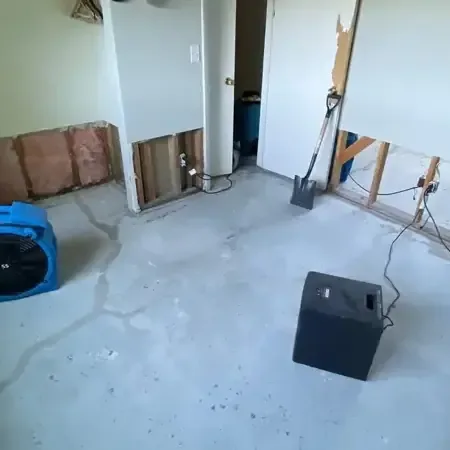
Doors are closed and the area is separated so the contamination does not travel through the house. Standing sewage is pumped out with extractors, the same water extraction equipment used after floods.
Removal, cleaning and drying
Carpet, pad, soaked insulation and low drywall are removed because they cannot be made safe again. Hard surfaces are cleaned and treated, then the space is dried with dehumidifiers and air movers until readings show it is dry.
Speed matters here too. Wet porous materials can start growing mold within 24 to 48 hours, and sewage makes the case for fast removal even stronger.
Cutting the odds of a repeat
Most repeat backups trace to the same few causes, and a plumber can check each one.
- Have the cleanout located and checked so it can be opened when needed.
- Ask whether a backwater valve is in place and when it was last tested.
- Keep grease, wipes and paper towels out of toilets and drains.
- Know which drains in the house connect where. Borough rules bar floor drains, yard drains and downspouts from the sanitary sewer.
Questions
Does the borough maintain the pipe that runs from a house to the street?
The Sewer Department maintains sewer pipes only up to the curbline. The resident owns the service lateral and maintains the connections and cleanouts on the property. Where the section from the main to the curb needs renewal, the Sewer Department renews it.
What does the March 2024 amendment say about damage?
The code says the borough is not responsible for damage done by sewage escaping from pipes or fixtures on the resident's property.
Is a backwater valve required in Lindenwold?
The sewer code requires backwater or check valves to prevent wastewater from flowing back into a property and escaping through fixtures below grade. They are installed at the resident's cost.
Is sewage backup water dangerous?
Yes. It is Category 3 water and can carry bacteria and other contaminants, so people and pets stay out and porous materials that soaked are removed.
Can the cleanup start before the cause of the blockage is found?
Yes. Containment and extraction can begin while a plumber and the Sewer Department work out where the blockage is, because sewage should not sit.