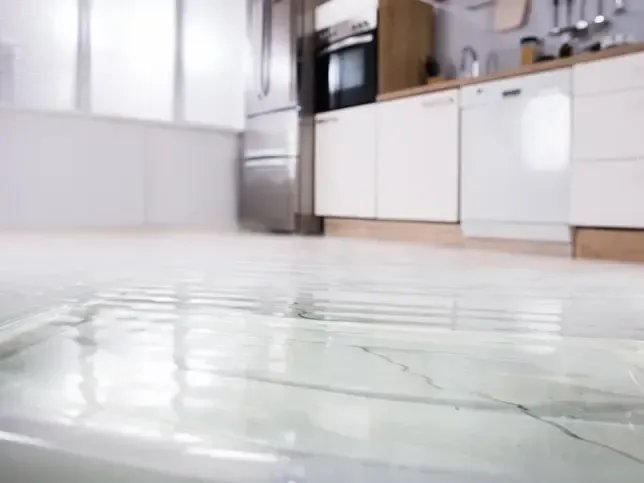
Stratford has 2,628 housing units, and about 29.0% of them are in buildings with two or more units. In those buildings a leaking washer hose or dishwasher connection rarely stays private, because water drops through the floor and lands on a neighbor's ceiling. The other 71.0% or so are single family homes, where the same leak soaks the floor below and the walls around it. This post covers where appliance leaks start, what to do first and how the drying works in both units.
Key takeaways
- About 29.0% of Stratford housing units are in buildings with two or more units, so a leak in one unit can reach the unit below or beside it.
- The usual sources are washer hoses, dishwasher supply and drain connections, refrigerator icemaker supply and slow drips under sinks.
- The first step is shutting off the water to the appliance, or to the whole unit, and telling the building manager or landlord.
- Water that travels through a floor wets the ceiling, wall cavities and insulation below, so both units may need drying.
- Dated photos and a list of wet items from each unit make the cleanup plan clearer for everyone involved.
Why shared buildings change the problem
A leak in a shared building has two addresses: the unit where it starts and the unit where it lands. The person who notices it first is often the one below, looking at a brown stain that is spreading across the ceiling.
Census data for 2020 to 2024 puts the median Stratford home at about 1961, so many buildings are older ones where floors and supply connections have had decades of wear. That is not a reason for alarm, only a reason to look at hoses and valves.
In a single family home the water has no neighbor to reach, but it still spreads under flooring, into cabinet bases and down into whatever sits below the floor. The first steps and the drying are the same either way.
Where appliance leaks start
Washing machines
The two supply hoses behind a washer sit under constant pressure. A bulge, a crack or a loose coupling can turn a slow drip into a steady flow when the washer is running or even when it is off.
Dishwashers and sinks
A dishwasher has a supply connection and a drain connection, and either can loosen or split. The leak collects inside the cabinet under the sink, then runs along the floor.
Because the water often stays hidden in the cabinet base, it can run for days before anyone sees a stain.
Refrigerators and icemakers
A refrigerator with an icemaker or a water dispenser has a thin supply tube behind it. If that tube leaks, water runs under the refrigerator and into the subfloor, usually out of sight.
- Warped or soft flooring in front of the refrigerator.
- A damp smell near the kitchen cabinets.
- Floor edges that look stained or swollen.
What to do in the first hour
The aim is to stop the water and keep it from traveling. Everything else follows from that.
The photo step matters more than it seems. A dated picture taken before anything is moved shows where the water began and how far it spread.
- Close the shutoff valve to the appliance, or the main valve to the unit if the appliance valve is stuck.
- Unplug the appliance only if the floor around it is dry and the outlet is safe to reach.
- Contact the building manager or landlord so the unit below can be checked.
- Lift rugs, boxes and electronics off wet floors.
- Take dated photos of the leak source, the wet floor and any ceiling stains.
How water gets to the unit below
Water follows gravity along floor joists, around pipe openings and under bathtubs. It can travel some distance sideways before it drops, so the stain below is not always directly under the leak.
A ceiling that bulges or sags is holding water. People should stay out from under it, because it can drop all at once, and the crew opens it in a controlled way.
Signs in the unit below
Brown rings on ceiling paint, a bubbling texture and drips from light fixtures are the usual signs. A light fixture that drips is also an electrical concern, so power to that circuit goes off.
Who handles what between neighbors
In a shared building, the building manager, landlord or owners association is the right place to start. They can say who maintains the shared floors and walls and who contacts the other unit.
The restoration team stays focused on the water, the drying and the record of what was found. It works in both units when the owners agree, and it keeps each unit's readings and photos separate.
Cleanup and drying in both units
Appliance leaks are usually clean water, so many materials can be dried in place when the job starts early. Appliance leak water damage work begins with extraction and moisture mapping in the unit where the leak started.
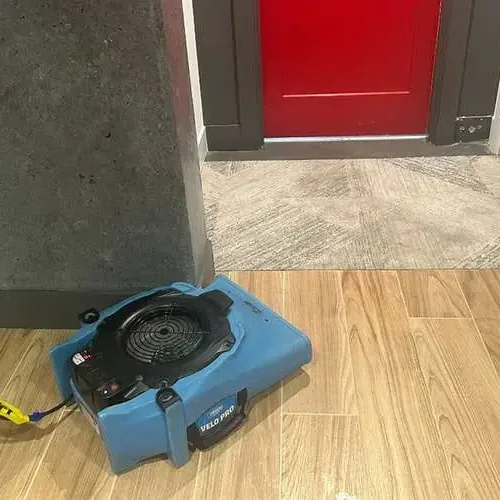
In the unit below, ceiling leak water damage work opens wet drywall, pulls wet insulation and dries the cavity. Dehumidifiers and air movers then run until readings are normal.
Hardwood and laminate near a dishwasher or washer need extra attention, because they cup and lift when water gets underneath. Drying mats can pull moisture out of a floor that would otherwise need replacing, if the leak is caught early.
- Wet drywall that has softened or sagged is usually removed and replaced.
- Insulation above a wet ceiling is checked and pulled if it is soaked.
- Floors are tested with a moisture meter so wicking under cabinets is not missed.
- Mold can start within 24 to 48 hours on wet materials, so the first day counts.
Preventing the next leak
Most appliance leaks come from a handful of parts, and each can be checked in a few seconds.
- Look at washer hoses every few months for bulges, cracks and rust at the couplings.
- Replace old rubber hoses with braided ones before they fail.
- Turn off the washer supply valves when away for a long trip.
- Pull the refrigerator out once a year and look at the supply tube and the floor behind it.
- Learn where the unit shutoff is, and see the appliance and supply hose leaks basics before a leak happens.
Questions
How much of Stratford is in buildings with two or more units?
About 29.0% of Stratford housing units are in buildings with two or more units, and about 71.0% are single family homes.
What if the leak started in a neighbor's unit?
Tell the building manager or landlord, take dated photos and keep the ceiling area clear. The cleanup in the affected unit can start while the question of the source is sorted out.
Is appliance leak water dirty?
Supply water from a washer, dishwasher or icemaker is clean at the start, so many materials can be dried in place when the job begins early. Drain water is different and is handled with more care.
Why is a bulging ceiling dangerous?
It is holding water that can drop all at once. People stay out from under it, and the crew opens it in a controlled way.
Do both units need drying?
Often yes. Water that travels through a floor wets the ceiling and wall cavities below, so both units are checked with a moisture meter.