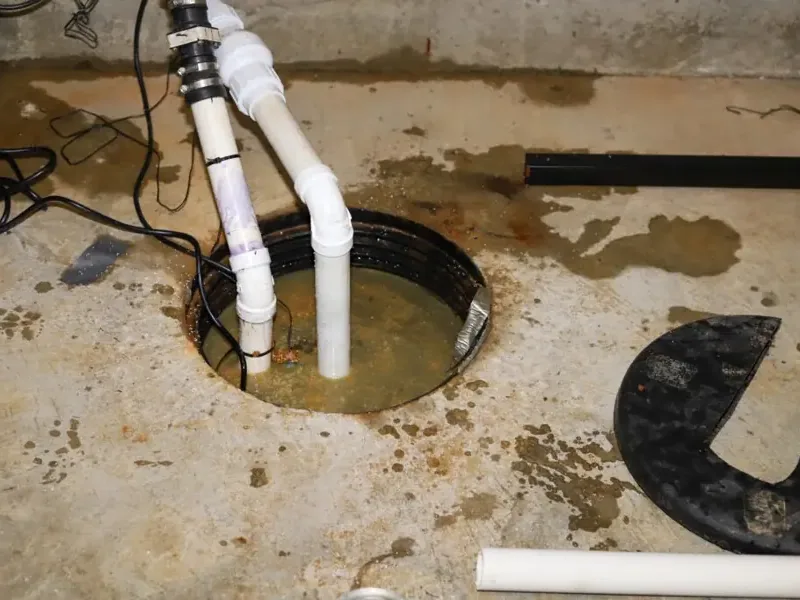
The ground under much of Marlton stays wet for long stretches of the year, and a sump pit is often the only thing standing between that groundwater and a finished lower level. When the pump stops, the pit refills fast and the water spreads along the lowest path across the floor. This post covers why pumps fail here, what to do in the first hour and how the cleanup dries out a basement or split level.
Key takeaways
- The Marlton soil series carries a seasonal high water table about 18 to 42 inches down, so a stopped pump lets the pit refill quickly.
- The usual causes are a power cut during a storm, a stuck float, a clogged intake and a pump that cannot keep pace with a nor'easter.
- Standing water near outlets and the electrical panel is a shock risk, so power to the area goes off from a dry spot or by an electrician.
- Carpet, pad and wet drywall need extraction and drying within 24 to 48 hours, before mold gets a start.
- Photos of the water level and the pit, taken before anything is moved, make the cleanup plan clearer.
Why the sump pit matters so much here
A sump pit is a basin set into the floor, usually in a corner or a utility area. The pump sits inside it, and a float switch starts the motor when the water reaches a set height and sends the water out through a discharge pipe to the yard.
Many Marlton basements and split levels rely on a sump pump to stay dry. The seasonal high water table in the Marlton soil series sits about 18 to 42 inches below the surface, which is shallower than the floor of a typical basement.
Nor'easters and tropical storm remnants pile rain on top of that wet ground. A pit that handles a normal storm can be overwhelmed in a bad one, and a sump pump failure cleanup begins at the moment the pit overflows or the pump quits.
Four ways a sump pump lets go
A power cut in the middle of the storm
The same wind that tests a roof can take out the power. A pump plugged into house current stops the moment the outlet goes dead, and the pit refills just as the rain peaks.
A stuck float or a clogged intake
The float tells the pump when to run. If it jams against the pit wall, the pump never starts, or it keeps running dry.
Silt and small stones can also clog the intake so the motor hums without moving water.
A pump that is worn out or too small
Pumps wear out. An older unit may run nonstop through a long storm until the motor burns out, and a small one cannot keep up when groundwater rises fast.
- A pump that cycles far more often than it used to.
- A grinding, rattling or humming sound from the pit.
- Rust, silt or debris sitting in the pit.
- A discharge pipe that drips, ends against the foundation or freezes shut.
The first hour after the pit overflows
Safety comes before cleanup. Water and electricity share the lower level, and a wet outlet or panel can shock anyone standing in the water.
The goal in the first hour is to keep people safe and keep the damage from spreading. The rest can be sorted once the standing water is out.
- Stay out of standing water until power to that part of the house is off, and bring in an electrician if water reached the panel.
- Unplug the pump and check the cord, the outlet and the float, but only from a dry spot.
- Hold off on laundry and long showers while the pit is full.
- Lift furniture, boxes and electronics off wet floors, and photograph the water level before moving anything.
- Skip the mop. Towels cannot move this much water, so water extraction is the faster route.
What the extraction and drying team does
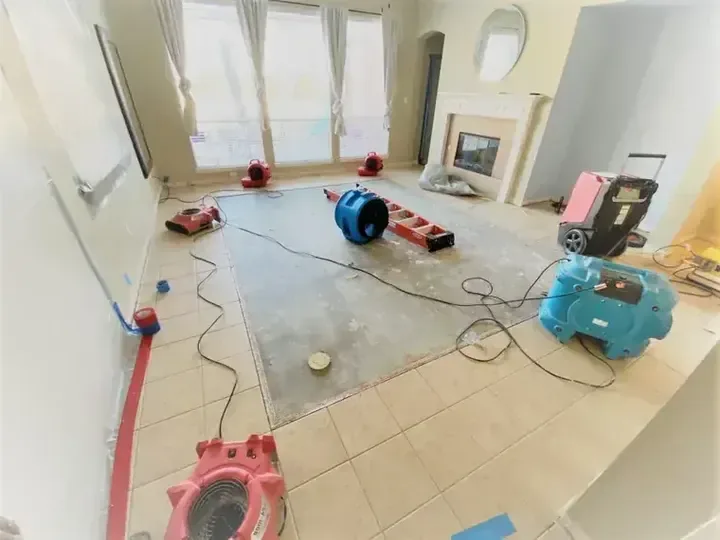
Standing water comes out first, using portable pumps and extractors. Then the team maps moisture in the slab, the wall bottoms and the carpet with a meter and a thermal camera.
Pit overflow carries groundwater and whatever sat in the pit, so it is treated as contaminated. That changes what can be saved.
It helps to tell the crew when the pump last ran, whether the power went out and where the discharge pipe ends. Those details point to the cause and show whether the pit is likely to refill while the drying equipment runs.
What usually comes out
Wet carpet pad, soaked insulation and the lower part of wet drywall are usually removed. Hard surfaces stay and are cleaned and treated.
What gets dried in place
The concrete slab, block walls and framing are dried with dehumidifiers and air movers.
Where readings stay high, baseboards and wall bottoms are opened so the cavity can dry too. Basement flooding cleanup ends when the meter shows the materials are back to normal, not when the surface feels dry.
Colonials, split levels and where the water goes
Colonials from the 1970s through the 2000s usually have a basement that spreads water across one large floor. A split level has a lower family room or laundry area that sits partly below grade, so the water reaches carpet and wall bottoms first.
Houses from the Marlton Lakes era, mostly built from 1958 to 1975, are old enough that the pump, the pit and the discharge pipe all deserve a look. The age of the house says little about the age of the pump, so the pit is worth checking either way.
Finished spaces change the work. A carpeted family room with drywall down to the floor holds water in more places than a bare slab with a washer and a few shelves.
Keeping the next storm from repeating it
No pump beats a storm bigger than the pit, but a working pump with power buys a lot of time.
In fall, clearing gutters and extending downspouts keeps roof water from adding to the load on the pit.
- Pour a bucket of water into the pit before storm season and watch the pump start and stop.
- Make sure the float moves freely and the intake is clear.
- Check that the discharge pipe is open and ends well away from the foundation.
- Think about a battery backup for the days when the power goes out.
- Keep stored items off the floor and on shelves.
Questions
Can a new sump pump still fail?
Yes. A stuck float, a blocked discharge pipe or an unplugged cord can stop a new unit as easily as an old one.
Is sump pit overflow water clean?
It is not treated as clean. Groundwater and pit contents carry soil and bacteria, so soaked porous materials are usually removed instead of saved.
How soon does mold start on wet carpet and drywall?
Mold can start within 24 to 48 hours on wet porous materials, which is why extraction and drying begin quickly.
Should the pump be replaced before the cleanup?
The cleanup does not need to wait for a pump installer. A working pump does keep the area from flooding again while the drying equipment runs.
Does a high water table mean every basement floods?
No. Many stay dry because the pump works. The risk is the day the pump or the power stops.
What should be written down before the cleanup starts?
The time the water was noticed, whether the power went out, what the pit looked like and which items got wet. Photos of each help the team plan the extraction.