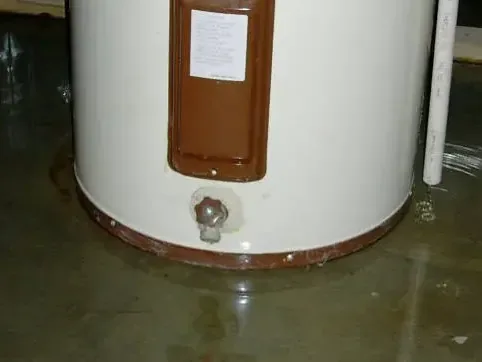
In a house built in the 1960s or 1970s, the water heater is often one of the oldest working parts of the plumbing. When a tank gives out it rarely drips politely, because most of what it holds ends up on the floor. This post covers why aging tanks and original copper matter in houses of that era, how to spot trouble early, what to do in the first hour and how the cleanup dries the space.
Key takeaways
- Original copper and aging water heaters are a known failure point in Marlton houses from the 1960s and 1970s.
- Warning signs include rust at the base, a relief valve that drips, rumbling or popping and a damp patch on the floor.
- The first move is shutting off the cold water supply to the tank and the power or gas to the heater.
- A tank in a basement, utility closet or garage soaks the floor and the bottoms of the walls around it.
- A leaking tank is replaced by a plumber, not patched, and the drying should not wait for the new one.
Why older houses need a closer look
Marlton Lakes houses were mostly built from 1958 to 1975, and the colonials and split levels that followed run from the 1970s through the 2000s. Houses from the 1960s and 1970s are the group where original copper and aging water heaters most often turn up.
Age alone is not a defect. It is a reason to look, because the parts that wear out are small and easy to overlook until they fail.
A house that has changed owners may also have had a few water heater swaps, so the label on the tank is the quickest way to learn how old it is.
- Tanks wear from the inside, where the protective lining breaks down over time.
- Copper can develop pinholes and weak joints after decades of use.
- Fittings at the top of the tank can loosen or corrode.
- Relief valves and connections need to move freely, and old ones may not.
How a water heater tank fails
Most tanks do not fail all at once. A hairline crack or a rusted seam starts as a weep, then opens as pressure and heat work on it.
The failure can be sudden. A tank holds enough water to cover a floor, and the water follows the easiest path down walls, under cabinets and across the floor.
- Rust colored water or rust stains at the base of the tank.
- A relief valve that weeps or drips.
- Rumbling or popping while the tank heats, a sign of sediment.
- A damp spot, a puddle or a musty smell near the heater.
- A pan under the tank that is rusted or always wet.
Where the tank sits changes the damage
A tank in a basement or lower level
Water spreads across the slab and soaks the bottoms of finished walls, carpet and anything stored on the floor. A sump pit or floor drain may carry some of it away, but the walls still wick.
A tank in a utility closet
The closet is small, so water runs under the door and into the wall framing and nearby rooms. In a two story house it can drop through the floor to the room below.
A tank in a garage
Water spreads across the concrete and soaks boxes, tools and the base of the walls. It enters the house less deeply, but it can still reach a shared wall.
The first hour after a tank lets go
Stopping the supply comes before cleaning. A tank keeps refilling from the cold water supply until that valve is closed.
Gas and electric heaters leak the same way, but a gas heater adds a safety step. The gas control goes to off, and the area is aired out before anyone works near it.
- Close the cold water shutoff on the pipe above the tank, or the main valve if that one will not turn.
- Turn off the power at the breaker for an electric heater, or set the gas control to off for a gas one.
- Keep out of standing water until the power to the area is off.
- Lift boxes, rugs and electronics off wet floors and photograph the damage.
- Skip the mop and bring in water extraction, which moves far more water than towels.
Original copper and what else can leak nearby
A water heater leak often exposes other old parts. The supply pipes, the connectors and the shutoff valves around the tank have the same age as the house, and a plumber should check them while the area is open.
A pinhole in a copper pipe or a split fitting nearby is a different job, handled as a burst pipe cleanup when it has released water into walls or ceilings. Washer hoses in the same utility area can add to the problem.
How the extraction and drying work runs
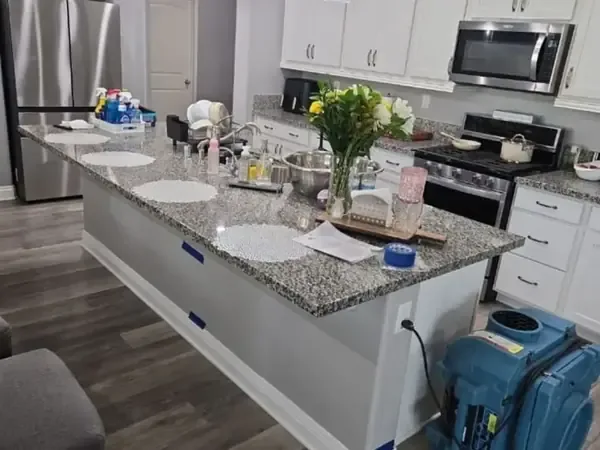
A water heater leak cleanup begins with extraction. Pumps and extractors pull the standing water, and the crew then maps moisture in the floor and walls with a meter and thermal camera.
Tank water is clean at the start, so many materials can be dried in place when the job starts early. Structural drying with dehumidifiers and air movers brings wet framing and slab back to normal.
- Soaked drywall at the bottom of the wall is usually cut out and replaced.
- Insulation that took on water is removed.
- Carpet and pad are lifted, and some carpet can be cleaned and dried in place when caught early.
- Mold can start within 24 to 48 hours on wet materials, so the first day matters.
Replacing the tank and avoiding a repeat
A leaking tank is replaced, not repaired. A plumber can handle the swap while the drying equipment runs, and the new tank should not go in over wet materials.
The replacement is also a good time to ask the plumber about the pipes around the tank. Those connections are the next most likely place for a leak, and they are easy to reach while the tank is out.
- A drain pan with a pipe to a safe spot catches slow leaks, though a full tank failure can overflow it.
- Replace stiff or corroded supply connectors when the tank is replaced.
- Look at the tank, the relief valve and the base once a year.
- Know where the shutoff valve is, and test that it turns.
- Keep stored items off the floor around the heater.
Questions
How do water heaters fail in older houses?
The lining inside the tank wears down over time, rust and sediment build up and seams or fittings start to weep. Then the leak grows, sometimes quickly.
What should be shut off first when a tank leaks?
The cold water supply to the tank, then the power or gas to the heater. A tank keeps refilling until the supply is closed.
Can a leaking tank be patched?
No. A leaking tank is replaced. A plumber handles the replacement, and the drying does not need to wait for it.
Is clean tank water safe to dry in place?
Water from a tank starts out clean, so many materials can be dried in place when the job begins early. Wet drywall that has softened is usually cut out.
Does a tank in a garage cause less damage?
It can, because the water spreads across concrete. Boxes, tools and wall bottoms still soak, and a shared wall can wick water into the house.